You Are What You Wear (For 90 Minutes)
The World Cup, off the field. On jerseys, symbols, and the bodies that carry them.
Every four years, the world doesn’t just watch the World Cup it assembles itself through it.
Beyond the spectacle of football, something more intricate takes shape: a global styling of belonging. Identity becomes visible, worn, negotiated in public. And at the center of it all, fashion not as trend, but as language.
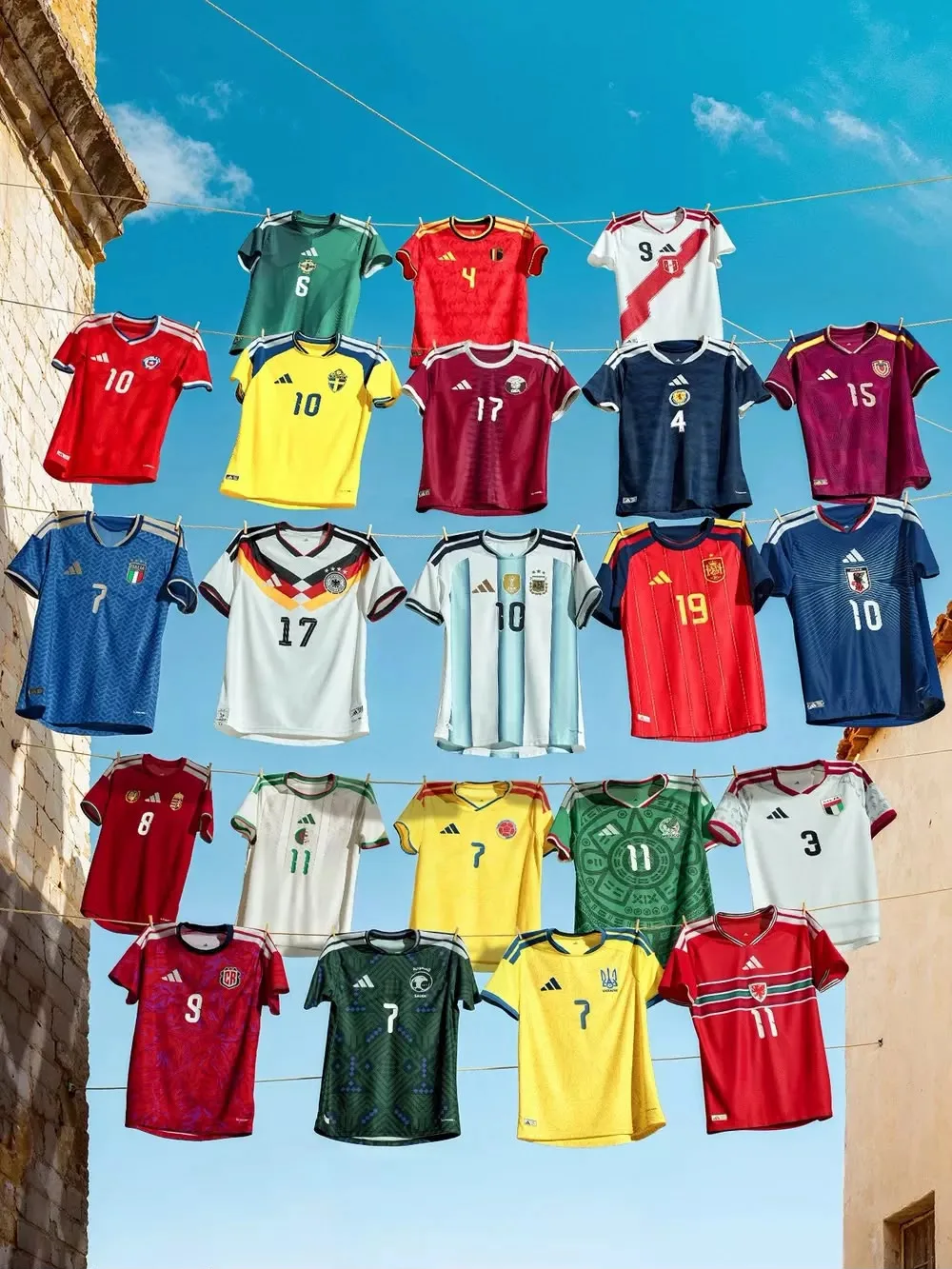
Jerseys are only the beginning.
What emerges around them is a layering of symbols flags wrapped around shoulders, scarves tied not for weather but for meaning, faces painted in colors that carry histories far older than the tournament itself. But more than that, people reach deeper. Into folklore. Into memory. Into fragments of cultural identity that, outside of moments like these, remain dormant or diluted.
Traditional patterns reappear, sometimes subtly, sometimes exaggerated. Embroidery, textiles, color palettes once tied to ceremony or heritage find their way into everyday wear, recontextualized for the present. A supporter is no longer just wearing a team, but performing a version of where they come from.
This performance is not neutral. It raises questions of authenticity and appropriation, of who gets to wear what, and how meaning shifts when cultural symbols are placed into a global, highly visible arena. When folklore becomes aesthetic, it risks being flattened, reduced to visual shorthand. But it can also act as resistance, a refusal to let identity dissolve into something generic, something easily consumable.
The World Cup becomes a space where these tensions coexist. Where pride and performance blur. Where identity is both reclaimed and reshaped in real time.
And it is not limited by gender.
Across streets, stadiums, and screens, both men and women engage in this visual dialogue, styling jerseys, reworking silhouettes, pairing national colors with personal aesthetics. What was once uniform becomes individualized. What was once collective becomes intimate. The same symbol, worn differently, tells entirely different stories.
In this sense, the World Cup does not just showcase nations it exposes how nations are imagined, worn, and understood by those who claim them. For a moment, the world agrees to look. But more importantly, it agrees to be seen. And in that visibility, fashion stops being superficial. It becomes evidence.
***Spiral Journal*** **by Spiral Corner**
Continue the exploration.
SPINE, the first issue by Spiral Corner, brings together 156 pages of fashion, culture, and emerging voices navigating a world in constant shift. From intimate conversations to visual stories, it captures people not as fixed identities, but in the process of becoming.
If this piece spoke to you, SPINE goes further.
Available now on **spiralcorner.com** Access also includes exclusive offers from our collaborators, including Antati Skin.