Writing as a Vital Organ
Discipline, structure, and regulation: how writing sustains thought itself.
Writing is often framed as expression emotional, optional, decorative. Something we turn to when time allows, or abandon when it doesn’t. This framing is convenient, but it is wrong.
This piece insists on a more demanding truth: writing is not an output, it is infrastructure. A system of regulation without which thought collapses into repetition, noise, and false certainty. Tayma Saliba does not romanticize writing here. She dissects it. She treats it as labor, discipline, and necessity closer to cognition than creativity, closer to survival than art.
At Spiral Corner, we are interested in writing not as performance, but as mechanism. Not as content, but as a vital process that keeps thinking legible in a world designed to fracture attention. This essay belongs to that lineage. It does not ask to be consumed quickly. It asks to be taken seriously.
Read it as maintenance. Not inspiration.
-**Mo Sabra** Editor-in-Chief, Spiral Corner
There are many things writing is depicted to be: a pastime folded into spare hours, a passion pursued when productivity allows, a form of self-expression that might be detached from consequence. But have we forgotten that writing is discipline, an act of valuable thinking, and a vital organ itself?
I haven’t. When I write, I breathe better, I think better, I talk better. When I don’t, its absence is never benign, always a loss. Writing is a critical cognitive function, not an accessory to thinking but one of its primary mechanisms.
**Writing as a Vital Organ**
To call writing a vital organ is to simply do it justice for what it is. Think of writing as an internal infrastructure. While expressive, it is first regulatory: a system that processes excess, filters noise and maintains equilibrium. And when it works, clarity is not just inspired out of thin air – it is produced.
This is why writing cannot be reduced to publishing, output, and communication. It exists before it is presented to an audience as thinking in motion – the act through which perception is organized, contradictions are held without collapsing, and attention is disciplined into coherence. Without writing, thought remains reactive, unprocessed, and easily distorted.
To quote Joan Didion: “I don’t know what I think until I write it down.” Perhaps the writer that articulated it best and with unusual precision, Joan Didion described writing as the method through which she discovered what she thought at all. For her, writing was not self-expression or catharsis: it was a tool, a way of seeing clearly enough to work though one’s own perceptions. This meant accepting the instability of thought before it is fixed on the page. Writing exposed the gaps and distortions that lived beneath certainty. It was a way of holding experience long enough to examine it rather than forcibly smoothing it into coherence prematurely. Didion often explains how the page becomes a site of confrontation, and how writing becomes a kind of calibration that could test what withstands scrutiny and what dissolves under attention.
A vital organ works to fulfill its role with precision, regardless of whether it “knows” the outcome or has assurance that conditions are ideal. It is independent of foresight, confidence, or external validation.

**All About Regulation**
Expression is episodic; regulation is continuous. For a brief period, writing will unload emotion or serve as a decorating experience. But for a longer, more impactful one, it will exist to prevent mental congestion. It’s the things we don’t see (or refuse to see) that need to be released, such as half-formed ideas, recycled assumptions, and unexamined reactions that begin to pass as thinking.
Without writing, thoughts loop instead of developing. Emotions seep into logic unchecked. Concepts repeat themselves with increasing confidence and diminishing accuracy. But writing interrupts this process. It forces sequence, hierarchy, and friction. It demands that ideas submit to structure.
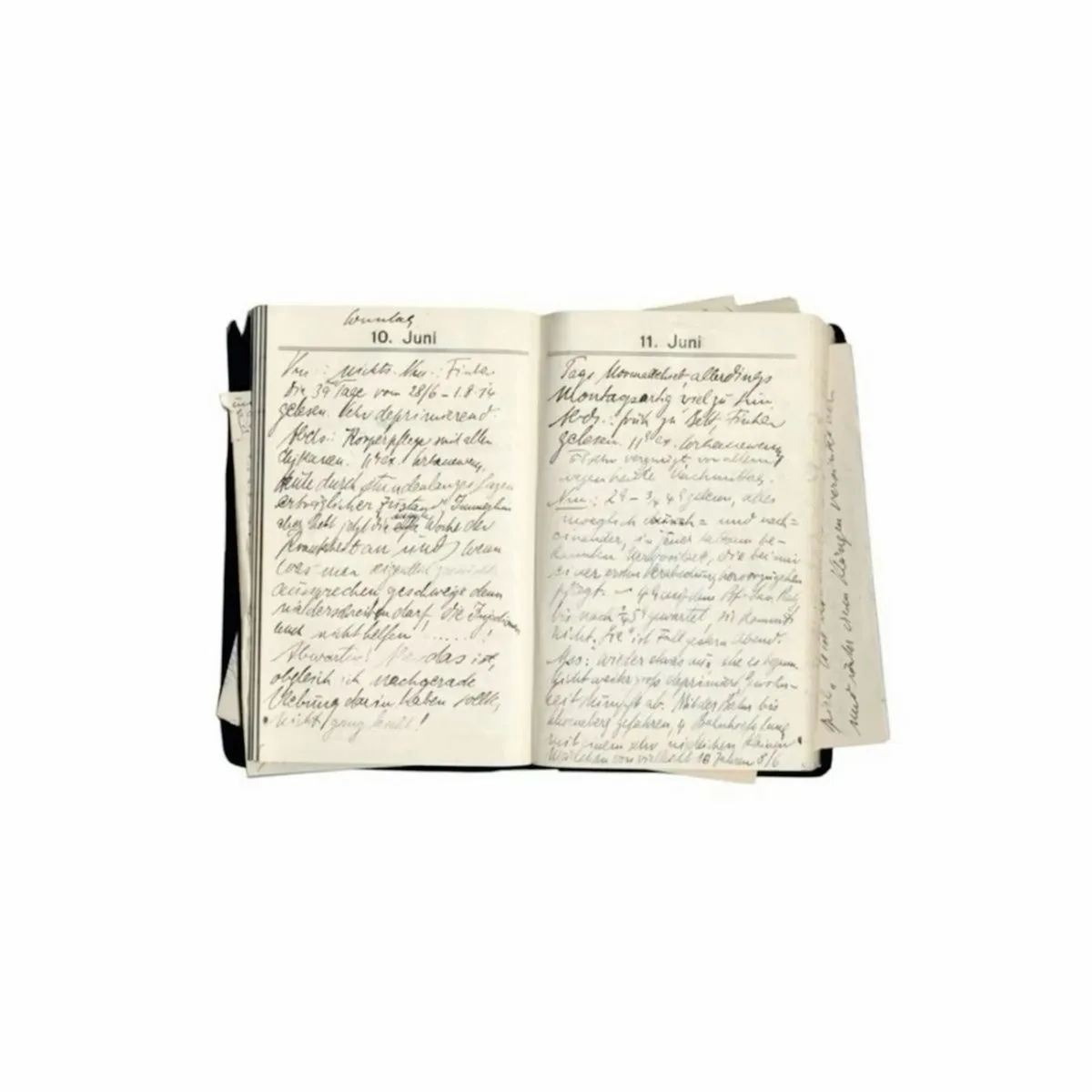
This is why writing feels more like maintenance, regulating the internal environment in which thinking takes place. When writing stops, thinking stagnates. Noise, and not silence, accumulates. I noticed this key distinction when I started keeping a journal. At first, I thought I was doing it for therapeutic reasons, but I was wrong. I found myself jotting things down throughout my day when I didn’t have my journal near me that I felt I absolutely had to write about. Anxieties, statements, thoughts that wouldn’t leave me. It wasn’t about letting them go – sometimes circumstances didn’t permit it – it was about capturing and arranging, noticing patterns and contradictions I wouldn’t see otherwise. Writing by hand also amplified this effect: the brain and hand working together as a single system, processing and ordering thought in real time.
Which is why I believe writing clears space not by emptying the mind, but by imposing order on what insists on remaining there.
**Discipline Over Inspiration**
The reality is, inspiration is unpredictable. It is volatile, uneven, and indifferent to necessity, eventually unreliable as a sole method. Discipline, on the other hand, maintains continuity. It will keep the system running regardless of mood or momentum. The practice of writing regularly is work that happens whether the mind feels inclined or not.
Consider Virginia Woolf, who wrote in the early morning, even if just for a few hours, treating her diary and essays as daily exercises in shaping thought. Consider Haruki Murakami, who claims running and strict daily routines are inseparable from the act of writing. Even Joan Didion, whose thinking emerges on the page, maintained a disciplined habit of daily notes, outlining, and constant revision. These writers didn’t publish or share all their daily material with the world, they simply show that consistent engagement is what produces clarity and coherence.
Once again, routine writing functions like an organ: it does its work continuously, without fanfare or recognition. Its power is invisible because it is structural instead of performative. Recognition can come and will be welcomed, but when the practice that gets us there is neglected, the consequences – albeit delayed – are tangible.
Writing only feels like leisure when its labor has already been completed elsewhere. When thinking is clear, language precise, and perception calibrated, it is easy to forget the mechanism that produced those conditions. Discipline sustains that clarity. Inspiration is merely a passenger; the organ keeps running regardless.
**The Work of Writing**
Before writing is fulfillment and expression, it is infrastructure. Like any vital organ, its absence is noticed only in the dysfunction that follows. It is indispensable. It is the mechanism that keeps thought legible. To me, it is that infrastructure that makes me feel invigorated when I write.
The writer who neglects practice may still think, but thinking without writing is provisional, unstable, and easily co-opted by noise. Writing feels like a luxury only until we recognize that reflection, reasoning, and insight depend on it.
**Written by:** Tayma Saliba **Editor’s Note:** Mo Sabra ***Spiral Journal*** **by Spiral Corner**