When the Screen Lifts: Fashion’s Fourth Wall Is Breaking
Inside the spectacle of the runway, and the line between those inside and out.
There was always a screen.
Not just the physical one the livestream, the projection, the mediated image but the invisible one. The one that decides who is inside, who is watching, and who is allowed to be seen at all. Fashion has never only been about clothing. It is a system of controlled perception. A structure that doesn’t just produce image, but organizes access to it.
This piece arrives at a moment where that structure begins to falter not collapse, but *expose itself*. When the screen lifts, the illusion doesn’t disappear. It doubles. You don’t move from outside to inside. You become aware that both positions were constructed from the start. What Tayma captures here is not just the evolution of the runway, but the destabilization of its authority. The shift from a single, dominant point of view to something fractured, shared, and increasingly uncontrollable.
But Spiral Corner isn’t interested in celebrating access at face value. Because visibility is never neutral. And expanded access does not automatically mean power has changed hands.
So the question isn’t whether the fourth wall is breaking.
It’s who is allowed to step through it and who remains part of the spectacle, just in a different form. This is where we begin.
-**Mo Sabra** Editor-in-Chief, Spiral Corner
The room is silenced. Conversations collapse into a low hum as the lights dim. A bassline creeps in first, somewhere between a heartbeat and a warning, vibrating through the floor before anything is seen. Then, a pause – held just long enough to tighten the air. And finally, a figure appears.
The model enters the frame. Every step feels rehearsed, measured, inevitable. Shoulders set, gaze fixed, body no longer entirely their own. Fabric moves with intention, catching light like it was designed for this exact moment – because it was. Nothing here is involuntary. Not the pace, not the posture, not even silence between footsteps.
You’re not at the movies, but everything is unfolding like you are. Because what is orchestrated on the runway isn’t just clothing – it’s perception, staged and controlled in real time.
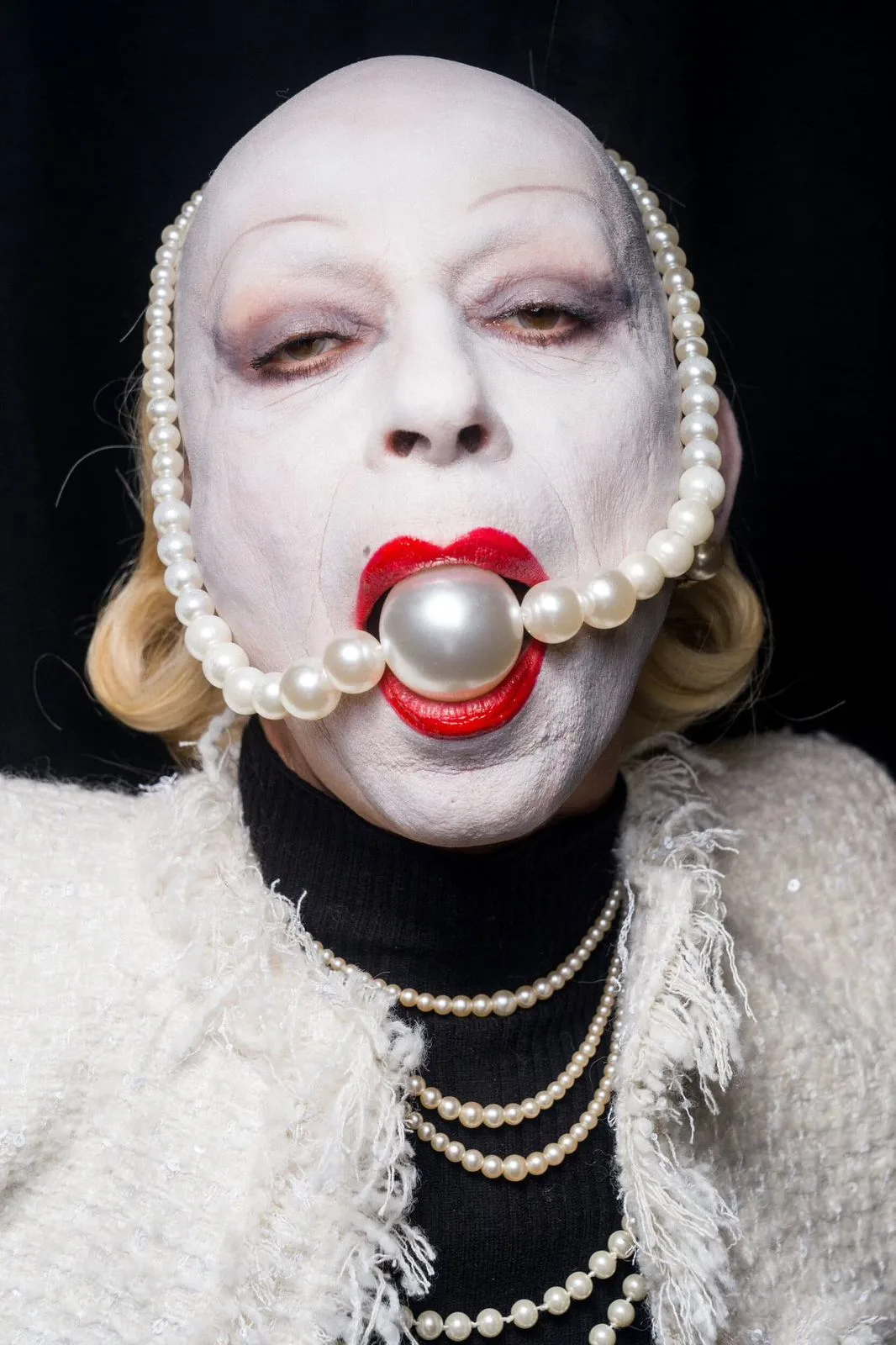
The Runway as Cinema
The opening moment of a fashion show is cinematic – just without the camera. The runway is like a film set, constructed with the same precision, the same intention to guide what is seen and how it is felt. Models move along predetermined paths, hitting invisible marks as if guided by an unseen hand. No wandering, no deviation. Their movements follow choreography as deliberate as any performance: the pace of the step, the angle of the shoulder, the absence or presence of emotion in the eyes. Some shows have detachment, others demand intensity, but all are calculated.
Clothing, then, becomes character. A silhouette can suggest a myriad of things: authority,alienation, fragility. The model is a role rather than a person, and said role doesn’t present the garment; it embodies its narrative. Around them, light and sound do their work decisively. A low frequency builds tension. A spotlight isolates. The whole atmosphere shifts.
Like any cinematic medium, the audience itself is positioned with purpose. The front row is the primary viewpoint, the equivalent of a camera’s frame and focal point. The back rows have the wide shot setting on, and might notice the lack of proximity gives them access to other details.
Fashion as Performance Art
Nowhere does this structure reach its most precise form than at Paris Fashion Week – wherehistory, spectacle, and precision converge to direct not just what is seen, but how it is seen. And while many brands operate within this control, some designers begin to push it somewhere else entirely.
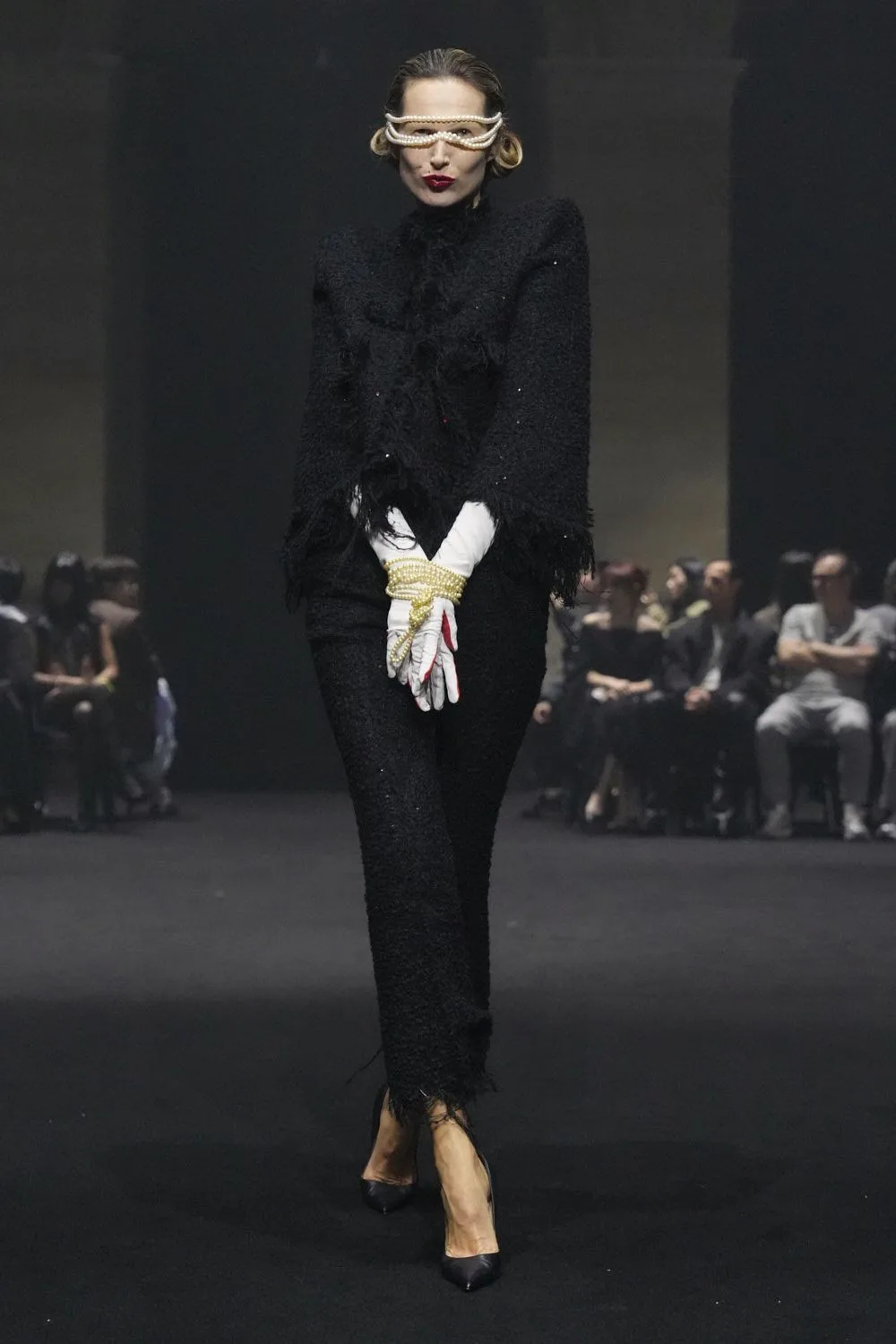
Labels like the French house Matières Fécales distort this system. Emerging within and around the gravitational pull of Paris Fashion Week, their work takes the logic of the runway and stretches it past recognition. Silhouettes erase the human form, distort faces, and unsettle proportion. Materials feel synthetic, alien, sometimes almost unwearable, as if the body is no longer the priority. Even the face becomes unrecognizable through makeup, posture, and styling, stripped of identity and rebuilt into something else.
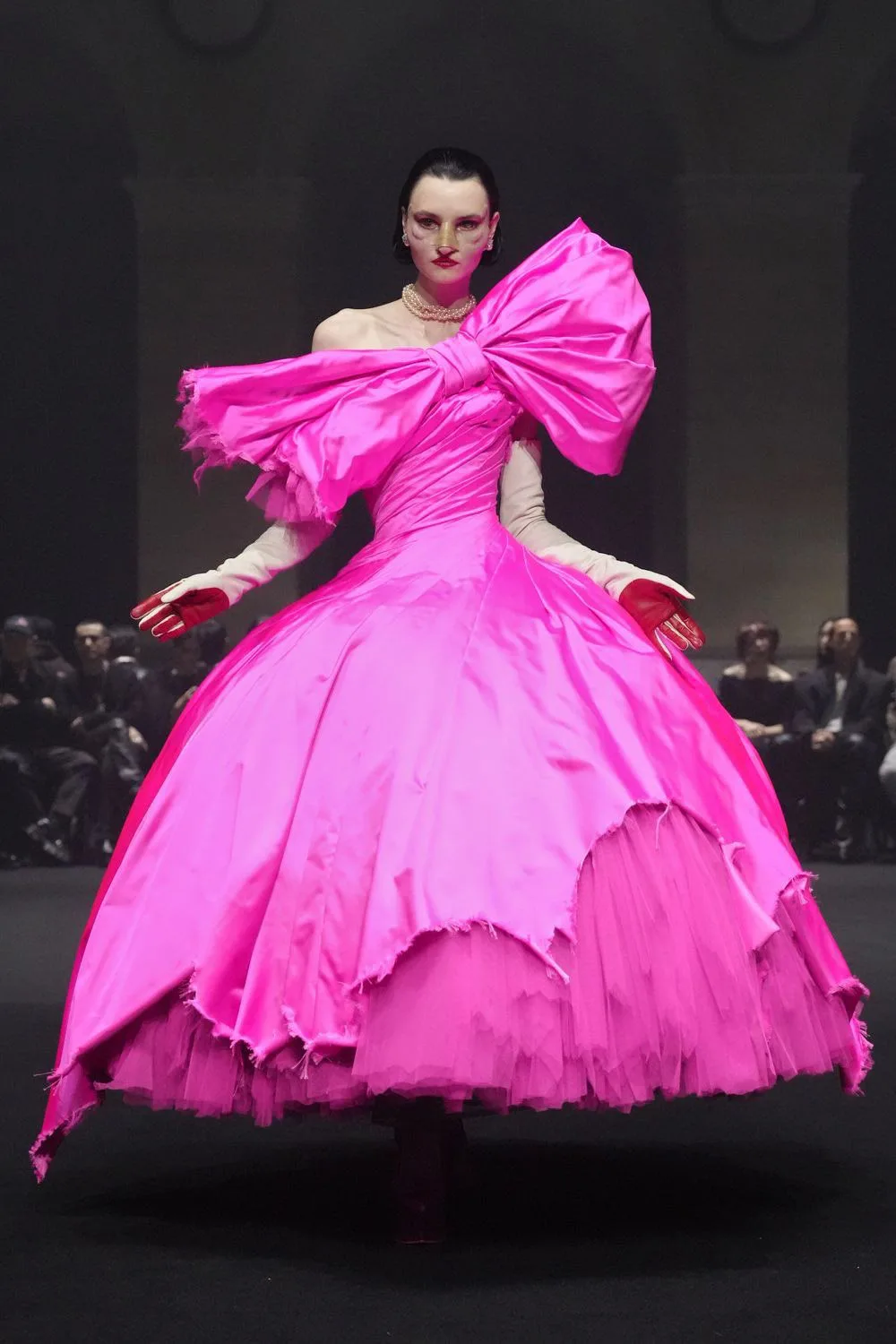
The Japanese brand Anrealage approaches this by shifting the focus toward perception tricks. Using thermo-responsive and optically reactive materials, their garments change in appearance under varying conditions, with patterns appearing, disappearing, and transforming as they move. Their work reframes the body. The model becomes a moving surface through which perception is continuously altered.
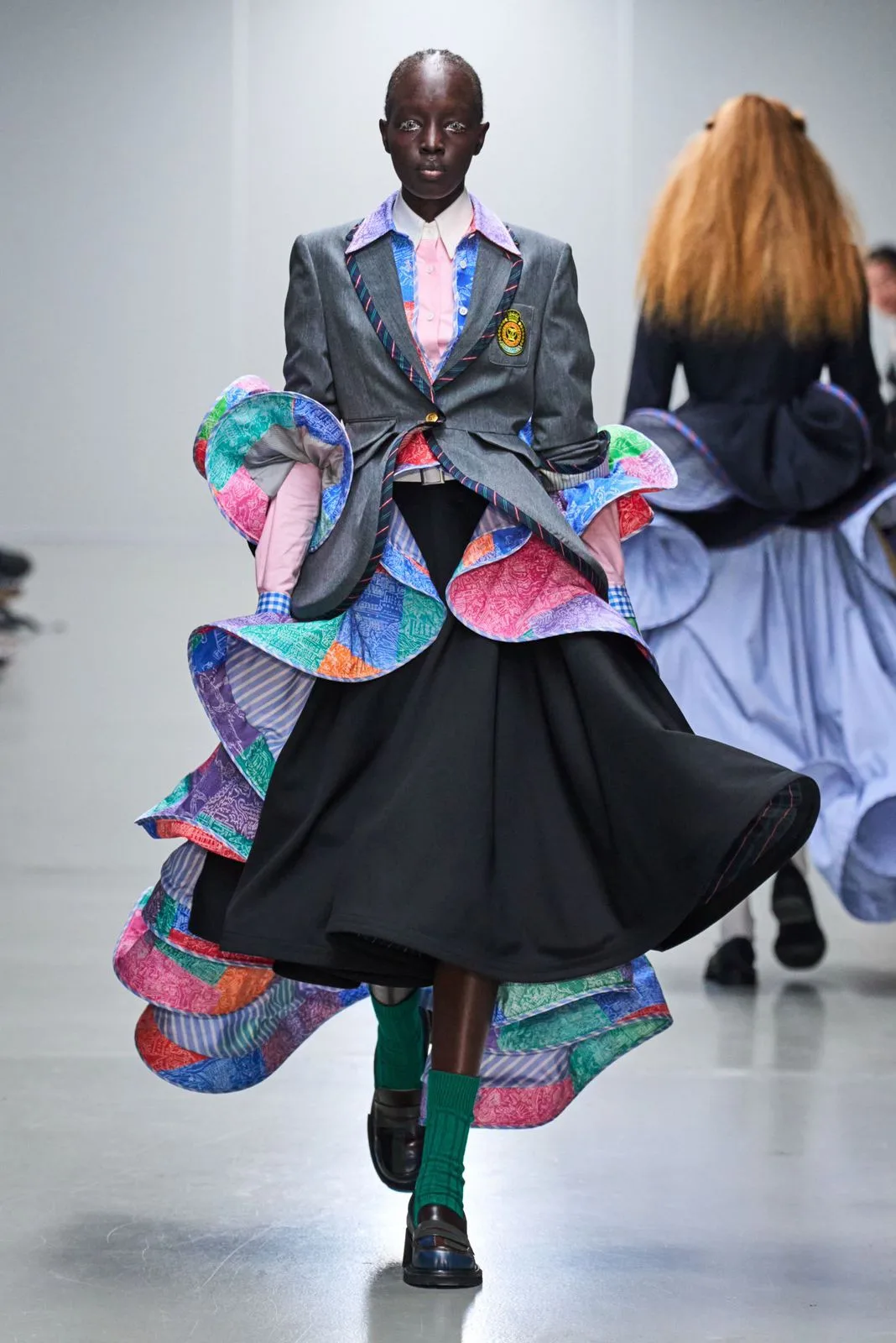
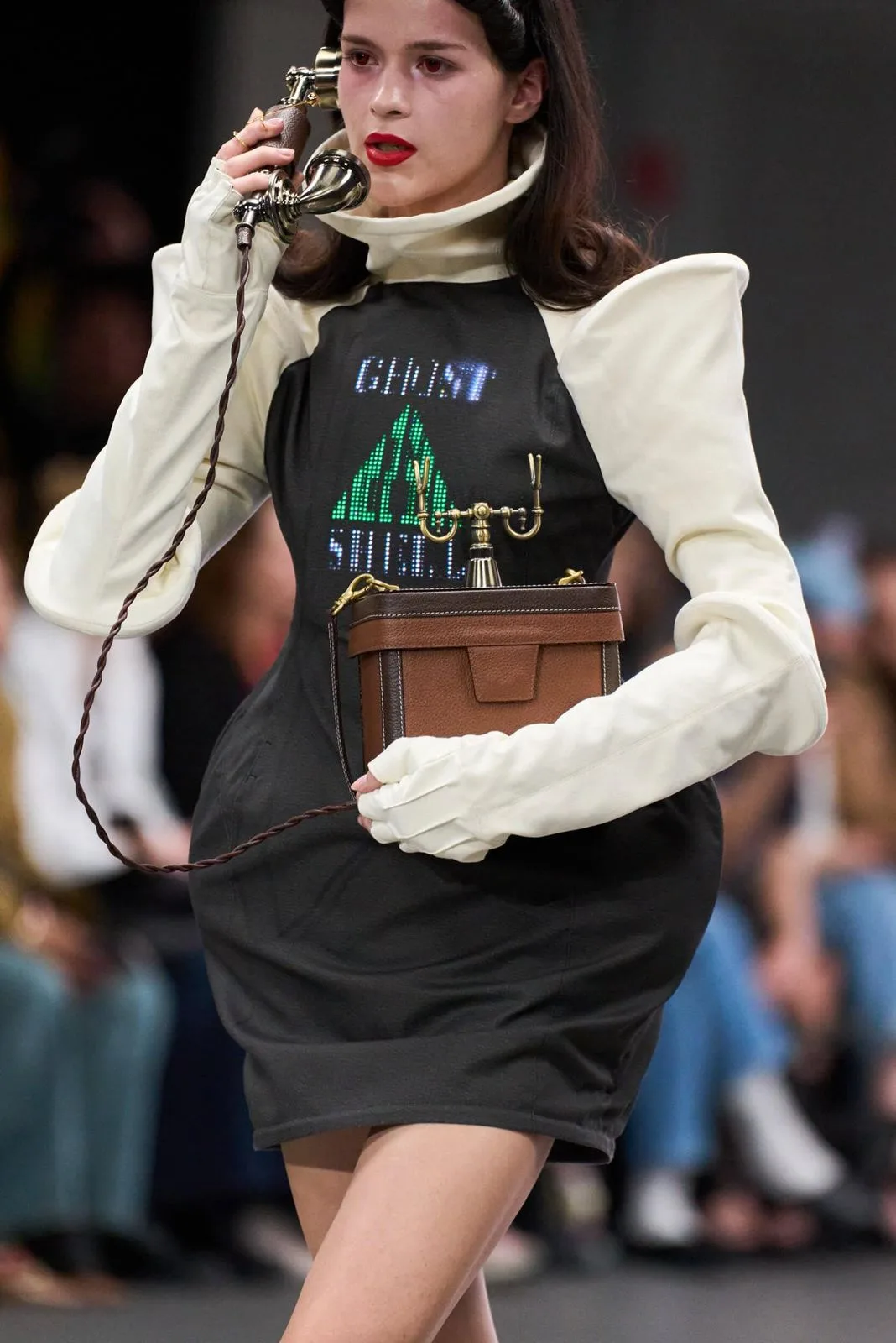
This isn’t dressing the body – it’s rewriting it. In both of these, and many others, fashion slips out of its traditional role. It becomes sculpture, performance, a kind of living installation moving through space. If the runway can reshape the body completely, it’s safe to assume it can just as easily reshape how reality itself is constructed, perceived, and understood.
The Hidden Architecture: Who Gets to See
Fashion isn’t just about what is shown – it’s about who is allowed to see it. At their core, visibility is distributed according to hierarchy rather than chance. Inside the room sit celebrities, editors, buyers, long standing cultural gatekeepers – those whose presence affirms the show’s relevance and whose perspective shapes how it will be received. Outside that circle exists everyone else, engaging with the same moment only through secondary channels, removed from the immediacy of the experience.
Even the runway itself is a layered experience. What is seen from the vantage point of the front row becomes the dominant image, while other perspectives might fade into the background. Weare also always shown who is sitting in the front row, but rare are the photographs of the rest. In that sense, visibility itself is curated as carefully as the clothes on display.
And within that structure, the boundary between inside and outside reveals itself.
Breaking the Fourth Wall
What separates inside from outside begins to manifest through how the show is transmitted. One of the most notable new forms of engagement is La WATCHPARTY, a collective that doesn’t simply broadcast fashion shows, but completely changes how they are experienced. Operating alongside presentations at Paris Fashion Week (and beyond), it extends the runway beyond its physical limits.
Lyas, the founder, brought together around 2000 people every day at the Théatre du Châtelet during last Fashion Week to watch, discuss, and party fashion. At the center of this idea is: the screen. For those outside the venue, the show is mediated through a projected feed – yet another layer between the moment and its audience. What was once a singular, contained experience becomes split: inside the venue sit the performers and the privileged audience; outside, spectators observe spectators, engaging with the representation of the show.
The divide is no longer abstract.
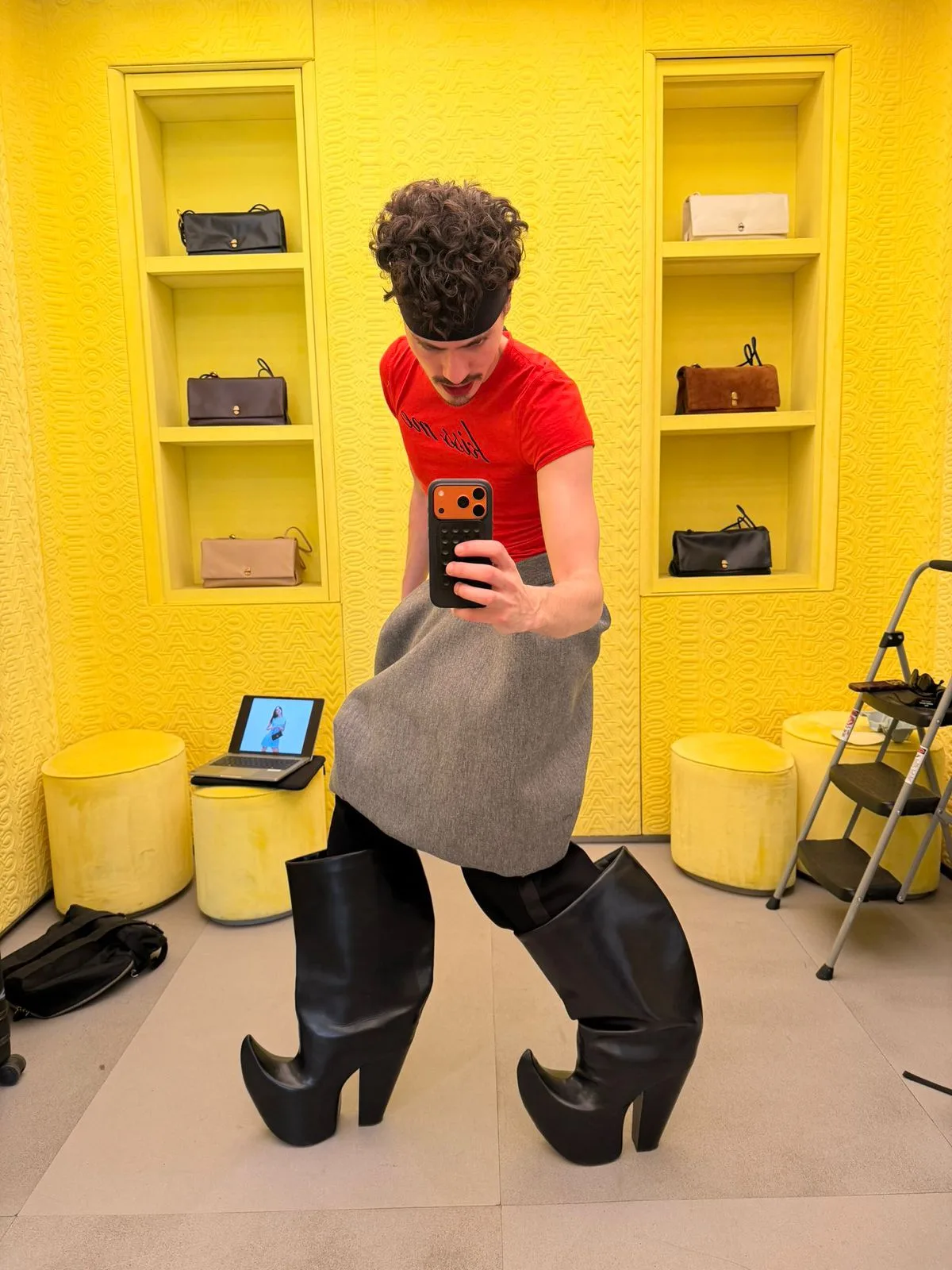
La WATCHPARTY is about making the idea of the fourth wall visible and present in the room. More than that, it encourages that tension to break. During Paris Fashion Week this past March, it broke. As the audience was watching London- based designer Betsy Johnson’s debut collection “Uniform” unfold on the screen, it suddenly lifted, and revealed the actual fashion show that was directly behind it all along. Picture it: the screen slowly lifting, maybe making us think the show is over. The processing of what’s actually happening. Kate Bush’s “Army Dreamers” playing, as if we needed to be in more of a trance. For the first time, the inside and the outside of the industry faced each other. The separation no longer holds in the same way. Both sides are drawn into the same space of perception. The viewers and the viewed. They shared the same field – unstable, exposed, and difficult to contain.
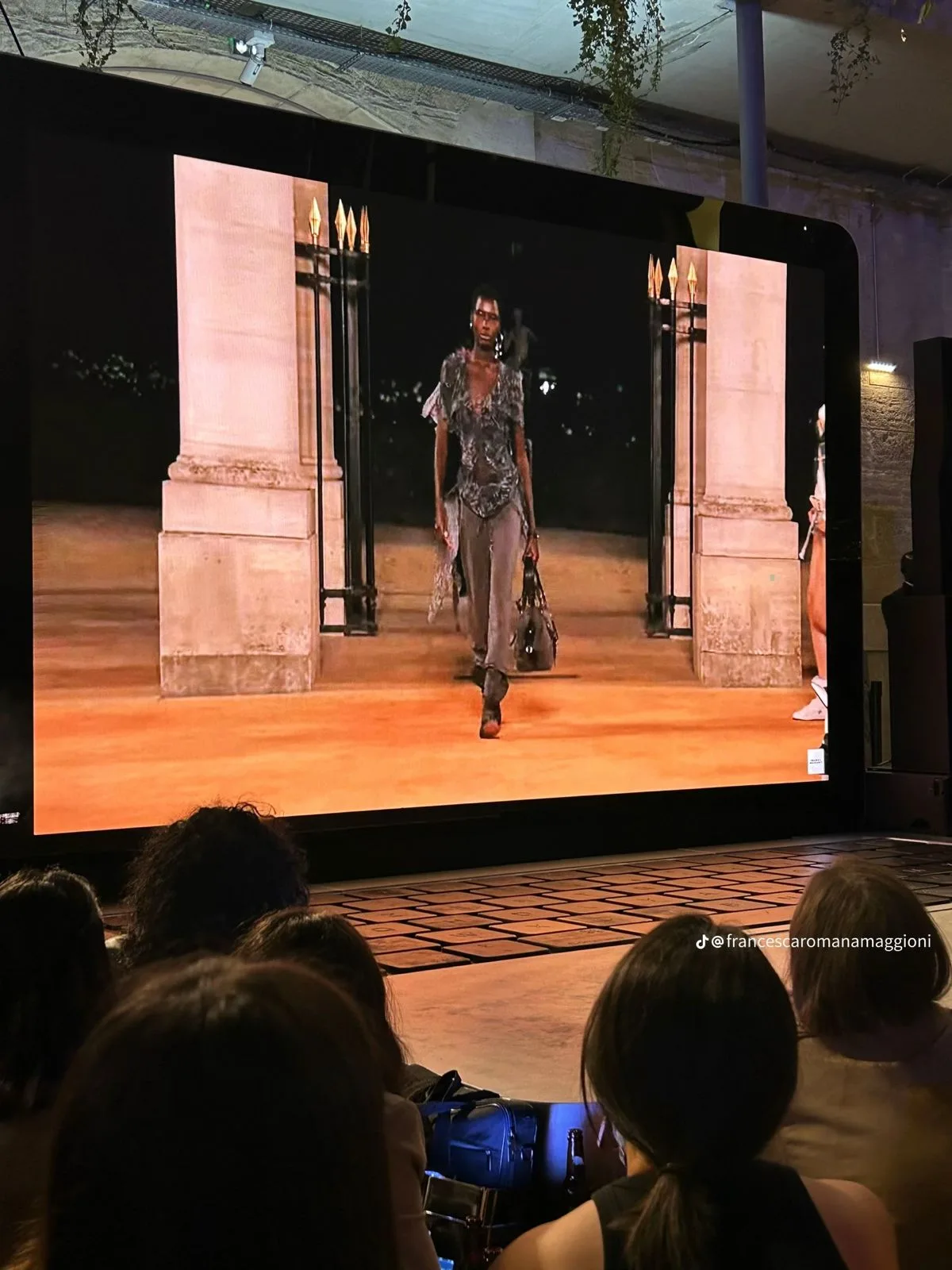
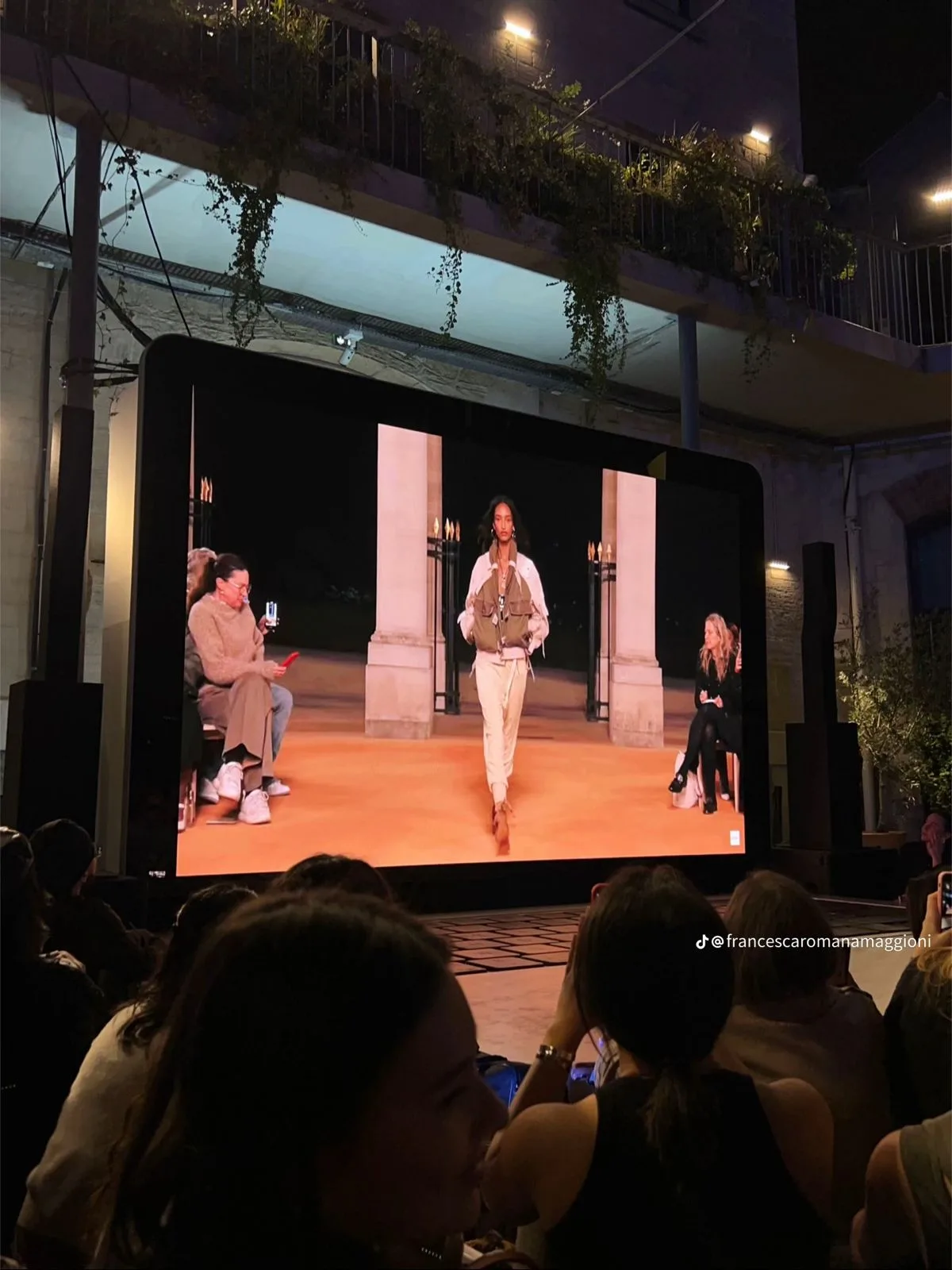
For a moment, fashion is no longer controlled
That rupture doesn’t stay on the runway. It spills into something fashion has always negotiated but rarely made so visible. Access and exclusivity. Spectacle and reality. The question of who gets to participate and who remains just outside of it. For all its openness, fashion has long operated through controlled visibility. Movements like La WATCHPARTY aren’t necessarily erasing that structure, they are revealing it, and unsettling it long enough so that when the screen lifts, the spectacle no longer holds in the same way.
The distance narrows down to zero. The structure shows itself. And then what? Maybe the structure stays the same. Maybe it’s simply arranged differently. But there is no denying that the position of the audience has changed. Our awareness of the structure, and how we can move within it has changed. The experience shifts from passive viewing to something more conscious, more unstable. The spectacle remains – but it’s no longer seamless. And with that, the outside doesn’t just watch – it enters the threshold of the fourth wall. It participates through recording, sharing, and interpretation, giving the show a life beyond its closed space.
After the Screen Lifts
With this shift, the runway, once untouchable, is no longer experienced from a single point of view. It can now exist across rooms, across screens – mirrored, streamed, and interrupted by itsown visibility.
The future of fashion may not be defined by what walks the runway, but by who stands on either side of it. Inside and outside are no longer fixed positions, but shifting roles within the same structure.
Is this a shift toward something more open, more collective? Or is it simply another form of designed perception? For an answer to these questions, we will have to wait and see. But one thing is clear: the runway was never just a place to look at clothes. It was a system of seeing. And now, that system is visible to everyone.
**Written by:** Tayma Saliba **Editor’s Note:** Mo Sabra ***Spiral Journal*** **by Spiral Corner**