What does it mean to have an aesthetic today?
We don’t just express ourselves, we construct ourselves
We like to believe that who we are is something we choose.
But what happens when identity becomes something we can buy?
This piece looks at the rise of aesthetics not just as trends, but as systems of belonging shaped by consumption, algorithms, and the need to be seen. It questions where authenticity stands in a world where every version of the self can be curated, performed, and sold.
Somewhere between expression and performance, something shifts.
This is where the article begins.
-**Mo Sabra** Editor-in-Chief, Spiral Corner
I buy, therefore I am.
Undeniably, the word aesthetic has become a dominant force across the internet, operating through subcultures, or “cores”: cottagecore, gothic, dark academia, quiet luxury, clean girl, office siren, boho, and countless others. If you are online, you belong to a niche, whether you realize it or not.
Yet looking like the part you chose (or were assigned) to play is only the surface. Beneath the costume lies a deeper will: a craving for belonging, the need to fit in, and perhaps the most revealing truth of all: consumption. To be something is to consume.
Throughout history, humans have longed to be seen through their actions and their presence. Paintings, writing, dance, music, and every form of art are ways of preserving our stories and asserting our existence in the present.

What has changed, then?
A caveman might have blown red dust over a hand pressed against stone to leave behind a mark of presence. Today, we leave our marks online; opening someone’s Instagram account is like peeking into a curated identity displayed on a screen. To trained eyes, semiotics become a powerful tool: it is possible to place someone into cultural niches based on their appearance, music taste, photos, and patterns of self-presentation.
We are not so different from our ancestors. We also leave fragments of ourselves behind to be seen. The difference is that our identities can now change completely within a month or two.
It has never been easier to become someone else, as our highly trained, personalized algorithms catch the nuances of our behaviors and show us exactly who we want to become, and fast fashion can be an ally for this practice.
“[...] *and then it hit me [...] this is the bad place*”
In the tv show *The good place*, the characters realize that there is a flaw in the afterlife’s point system. They learn that even with good intentions, their actions are linked to larger, exploitative systems. making it practically impossible to live a completely ethical life. The bottom line is: there is no ethical consumption under late capitalism. So, is it fair to judge people on things they have little control over?
Belonging is no longer as simple as claiming to be something. Having an aesthetic today often means buying your way into it (even when it does not appear that way). Online, there is endless content about authenticity and learning how to “be yourself,” yet every cultural practice can be understood as a distilled product of its historical moment. Ours, at this moment, may represent the pinnacle of consumerism.
Counterculture itself is no longer necessarily a threat to power. If every identity can be marketed and monetized, then everything becomes a consumer good; even resistance becomes a product. We no longer perform identities solely as expressions of a truer self, but often as escapes into spaces where we feel acceptable, validated, and visible.
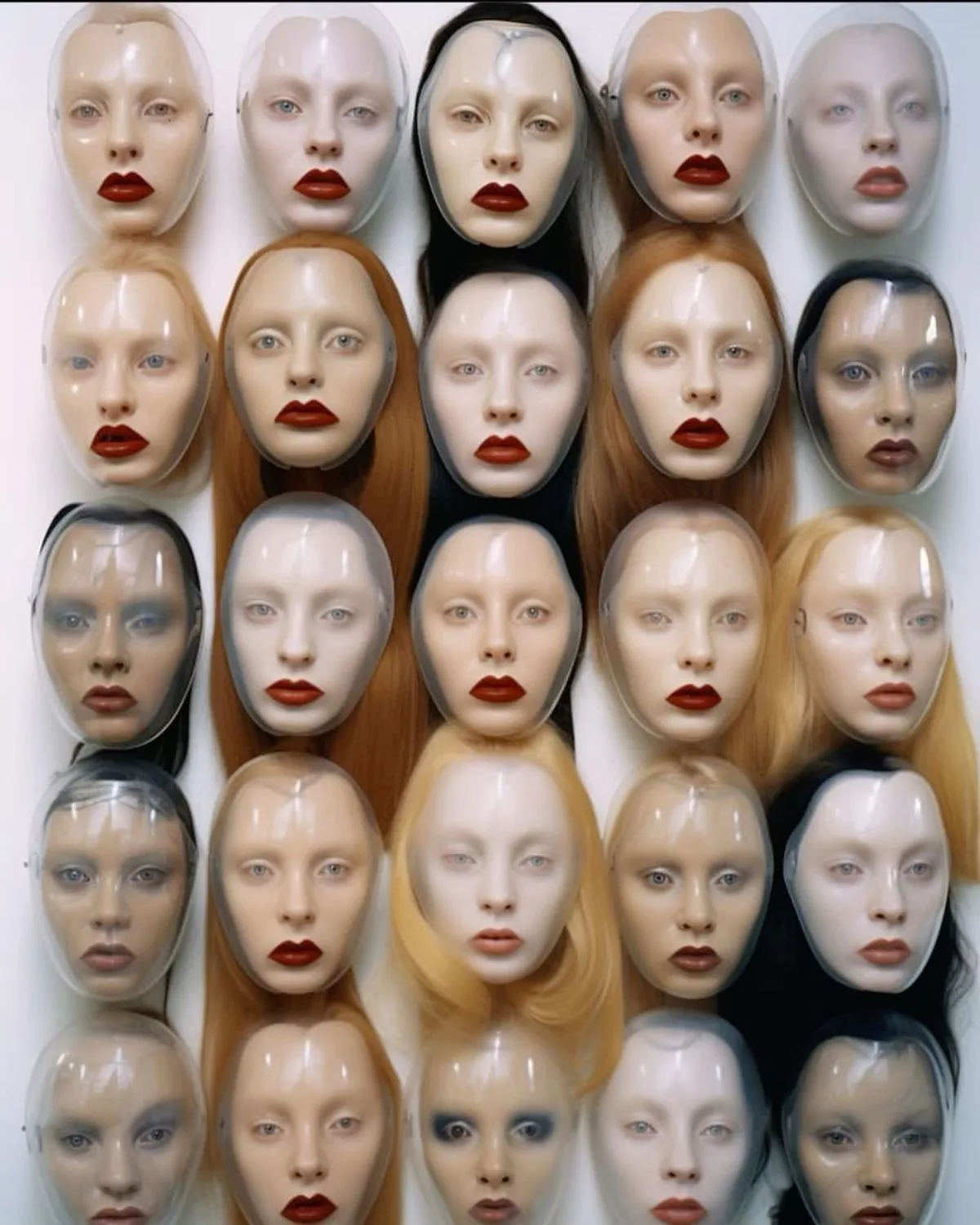
As every social action this is also a double edge sword.
It’s unfair to categorize identities and ease of self expression as only a product to buy whenever you feel like. All these aesthetics have been built on real practices and self expression, they were built upon artistic movements, emotional experiences, a cultural practice of reaffirmation. Within every “core” there is a manner to communicate a sense of belonging.
If everyone looked the same, had the same taste, listened to the same music and consumed the same media - *Who would we be?*
the internet didn’t invent the market or consumerism, of course it enhances it, but it’s only another ripple of capitalism. Different ways of expressing oneself have always existed, and will still exist once we move past capitalism. We live in an era where these expressions have become simplified into products, but nothing will ever remove the sincerity behind it.
There is no harm in finding yourself in different places, a new trend may be the one you were looking for. Being different people in different places is part of the human experience. And even capitalism cannot destroy authenticity, for we will always try to be ourselves, making mistakes along the way.
**Written by:** Vitor Roque **Editor’s Note:** Mo Sabra ***Spiral Journal*** **by Spiral Corner**