The Archival Glitch: Artifacts of a Revolution
Ten archival fashion pieces that broke the visual status quo and reshaped how the body speaks.
Before fabric meets flesh, it meets thought. Fashion is not worn, it is understood.
-**Mo Sabra** Editor-in-Chief, Spiral Corner
We are sometimes taught to believe that clothing is a secondary act. A layer of decoration added to the body once the real work of living has begun. But for those who speak the language of the avant-garde, a garment is never just a garment. It is a much more complex architecture of identity, desire, and control.
History is littered with beautiful clothes, but it is punctuated by disruptions. These are the rare moments when a designer refuses to follow the syntax of the season, and instead, chooses to interrupt it completely. These are the archival pieces that existed long before conversations around identity, technology, gender, and the body became mainstream. They functioned as a glitch in the cultural matrix, forcing us to look at the human form and its place in the world with fresh, often uncomfortable, eyes.
To understand pieces from the subversion of the silhouette to the weaponization of the feminine, we need to be looking at the blueprints that started it all. The blueprints of a revolution. Each of these pieces didn’t just say something new – they changed how fashion itself could speak.
THE BODY, REWRITTEN
Fashion, at its most fundamental, begins with the body. But who’s to say the body is a fixed thing? These designers certainly don’t agree. They viewed the human form as a starting point for sculpture, interrogation, transformation. By treating the skin as a canvas and the skeleton as a mere suggestion, these pieces dismantled the boundary between the wearer and the worn. They forced the observer to ask: where does the person end and the object begin?
**Alexander McQueen – No. 13 (Spring/Summer 1999)**
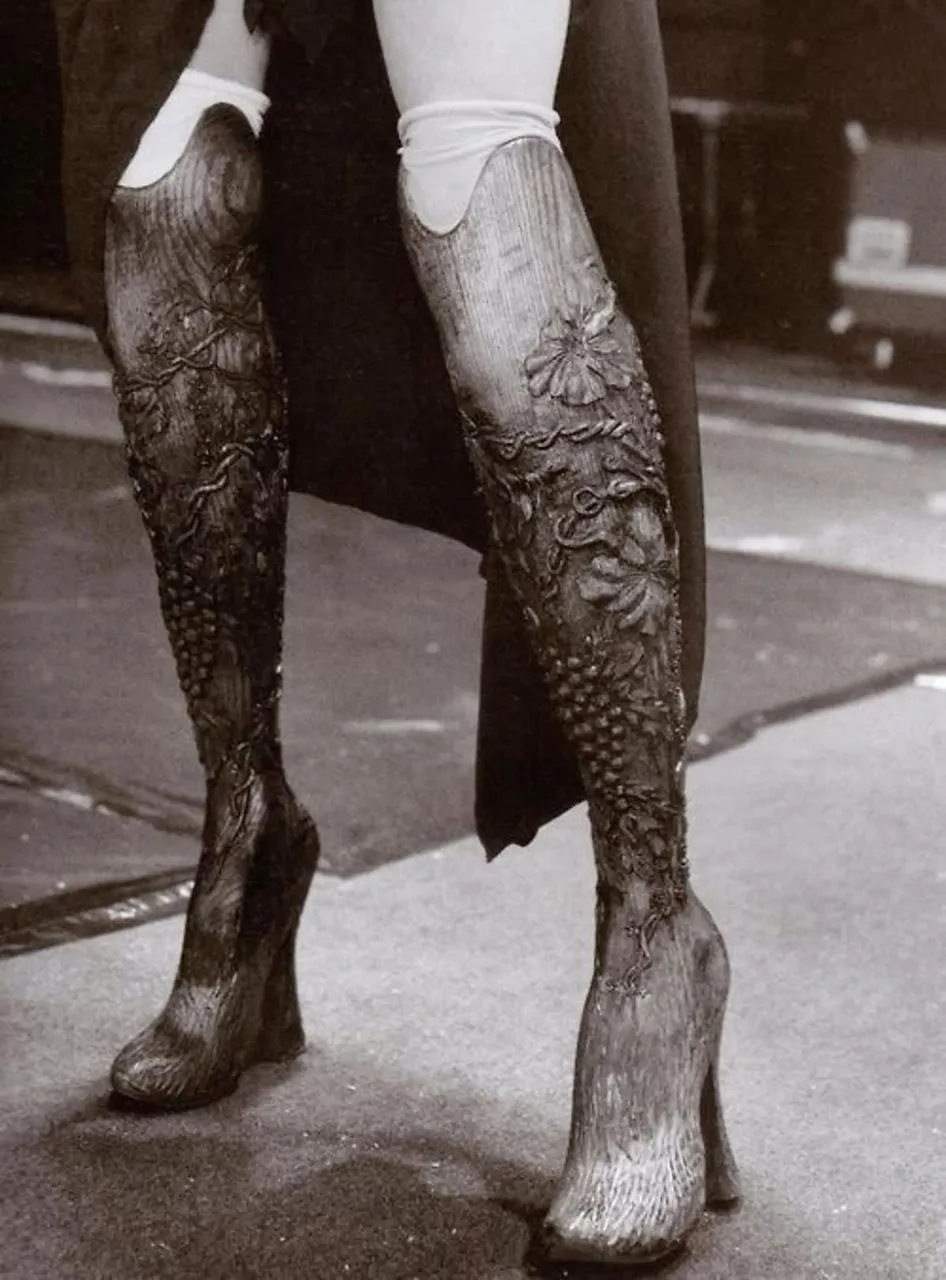
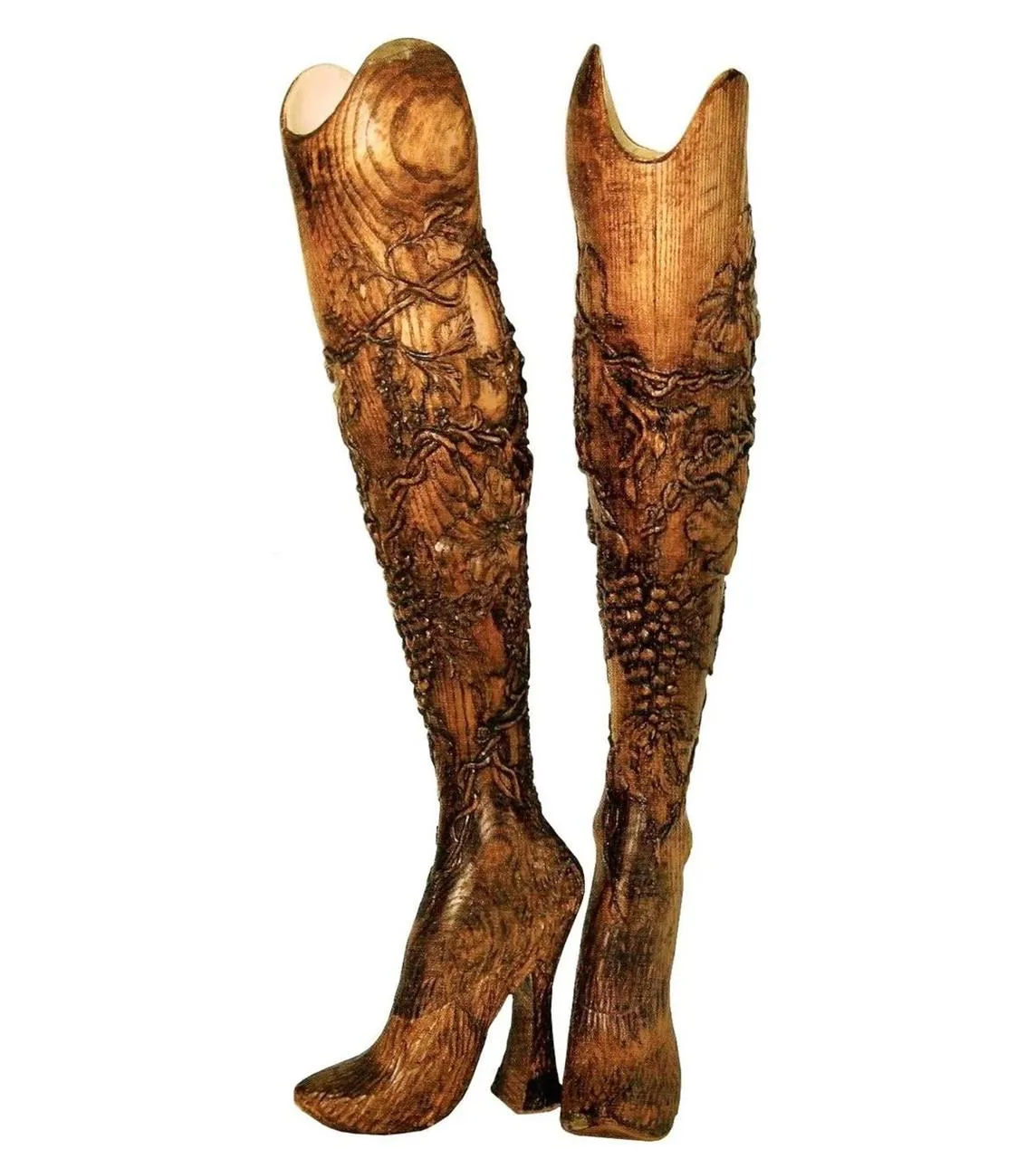
McQueen’s *No. 13* is best remembered for its finale of robotic arms spray-painting Shalom Harlow, but its most profound statement on the body was the appearance of model and athlete Aimee Mullins. In perhaps one of fashion’s most visceral moments, Mullins walked the show on a pair of intricately carved prosthetic legs made of solid elm wood and resembling baroque, Victorian-style boots. By integrating medical apparatus into high-fashion artistry, McQueen challenged the biological “given.” He reframed the prosthesis not as a deficit to be hidden, but as an aesthetic augmentation. He crafted a new body, instead of simply dressing it.
**Comme des Garçons – “Lumps and Bumps” (Spring/Summer 1997)**
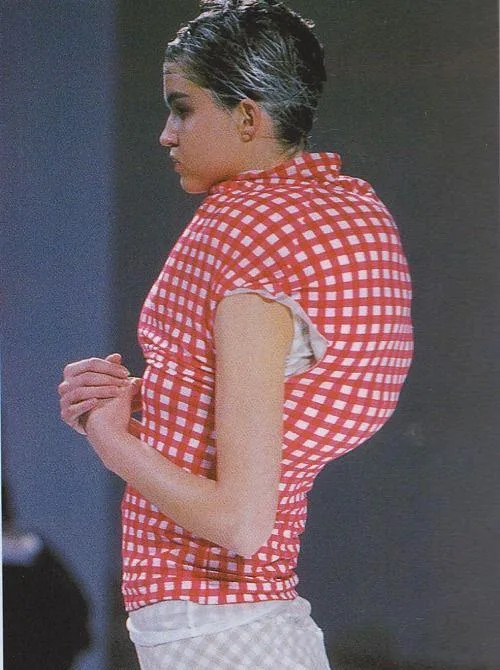
Formally titled *Body Meets Dress, Dress Meets Body,* Rei Kawakubo’s Spring 1997 collection acted as a rejection of the “heroin chic” and hyper-waisted silhouettes of the late nineties. By placing down-filled pads in asymmetrical clusters – protruding from the spine, the stomach, or a single hip – Kawakubo forced the viewer into a confrontation with a “dysmorphic” silhouette, one that completely disrupted the human form and challenged the industry’s obsession with symmetry. It remains a definitive exercise in repositioning the garment as something that can destabilize the wearer’s identity rather than just flatter it.
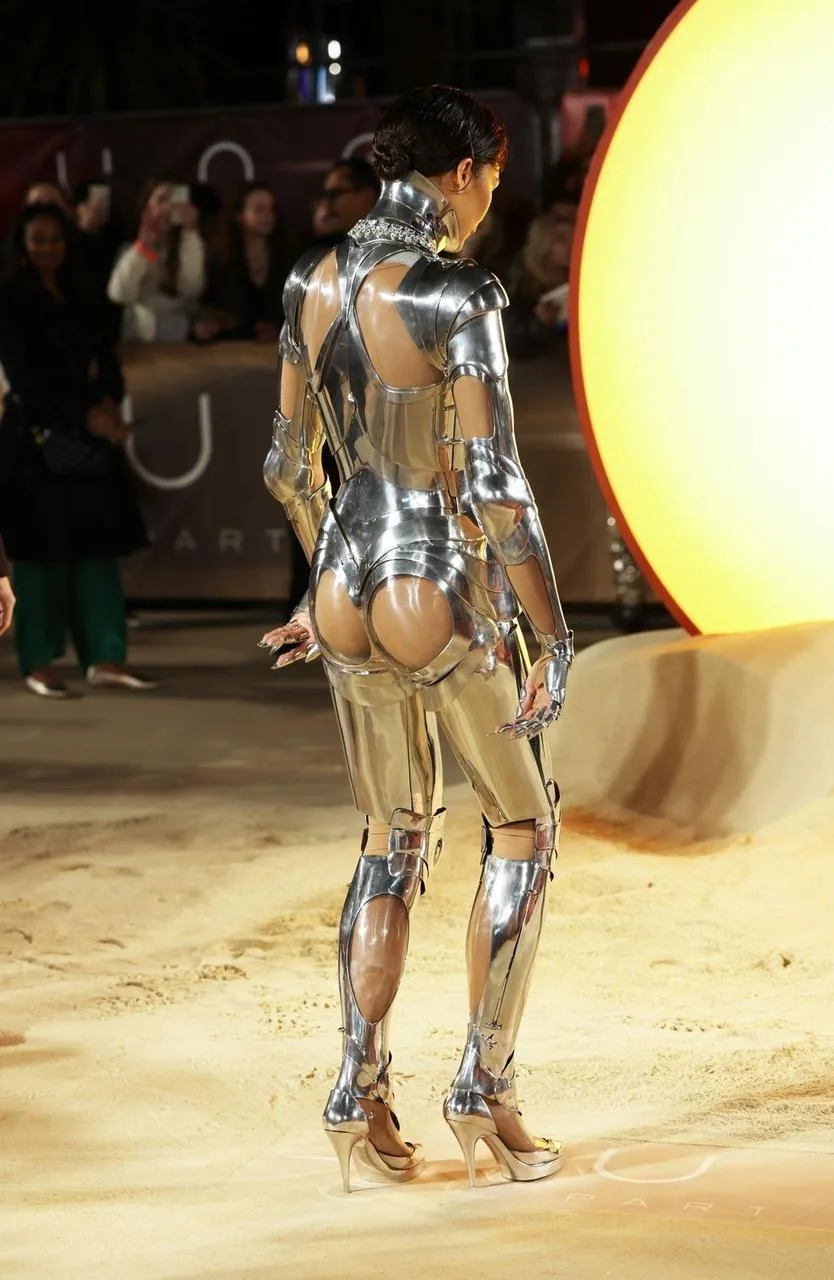
**Thierry Mugler – Cyborg Suit (Fall/Winter 1995)**
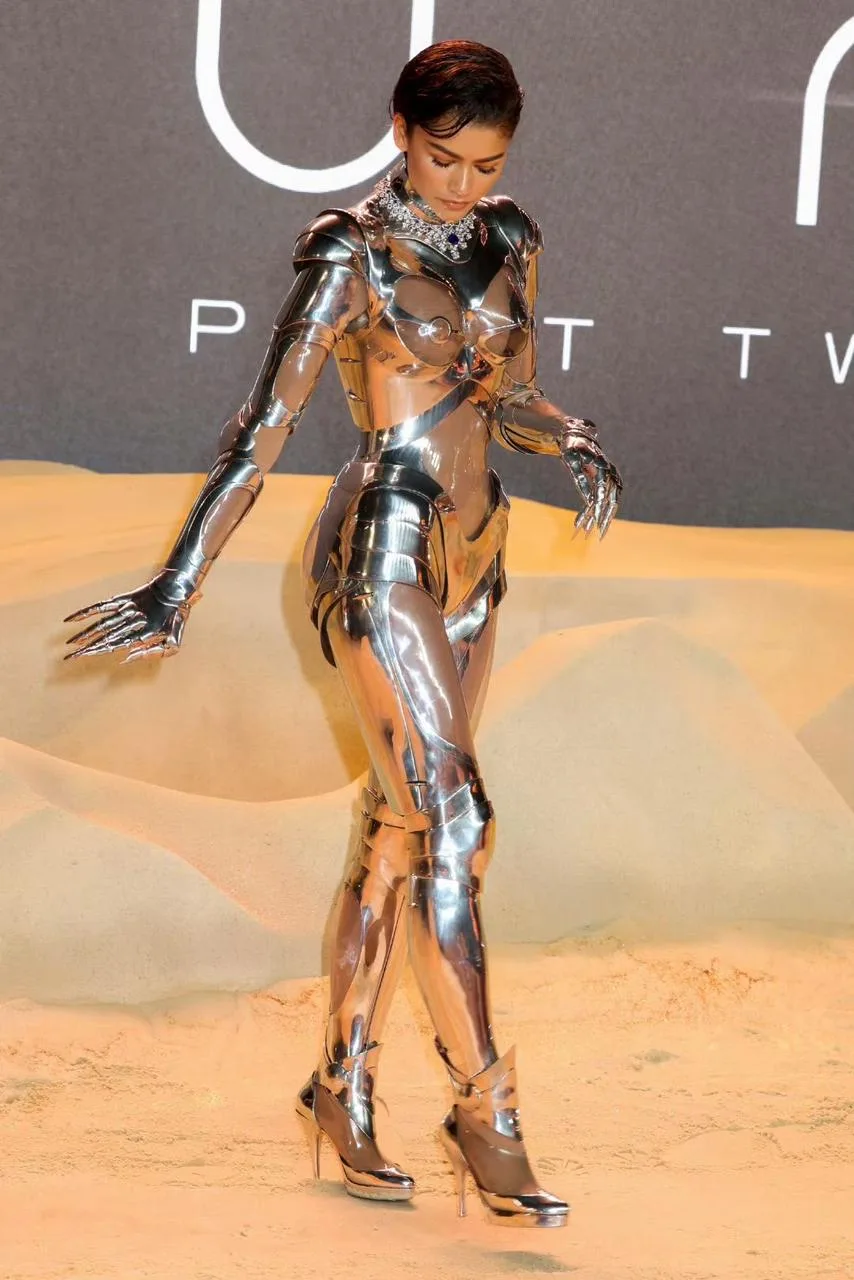
Debuted during his 20th-anniversary show at the Cirque d’Hiver, Mugler’s “”Maschinenmensch” (Machine-Human) was a feat of engineering six months in the making. Created in collaboration with aircraft specialist Jean-Pierre Delcros, the suit utilized chrome, PVC, and plexiglass to transform the model into a robotic idol. It dared to explore the “post-human” era – a concept where technology serves as a second skin. While described as “sexed-up cyborgs,” the piece had a colder and sharper connotation to it. It was an armored shell that suggested the future body would be a fusion of flesh and industrial hardware.
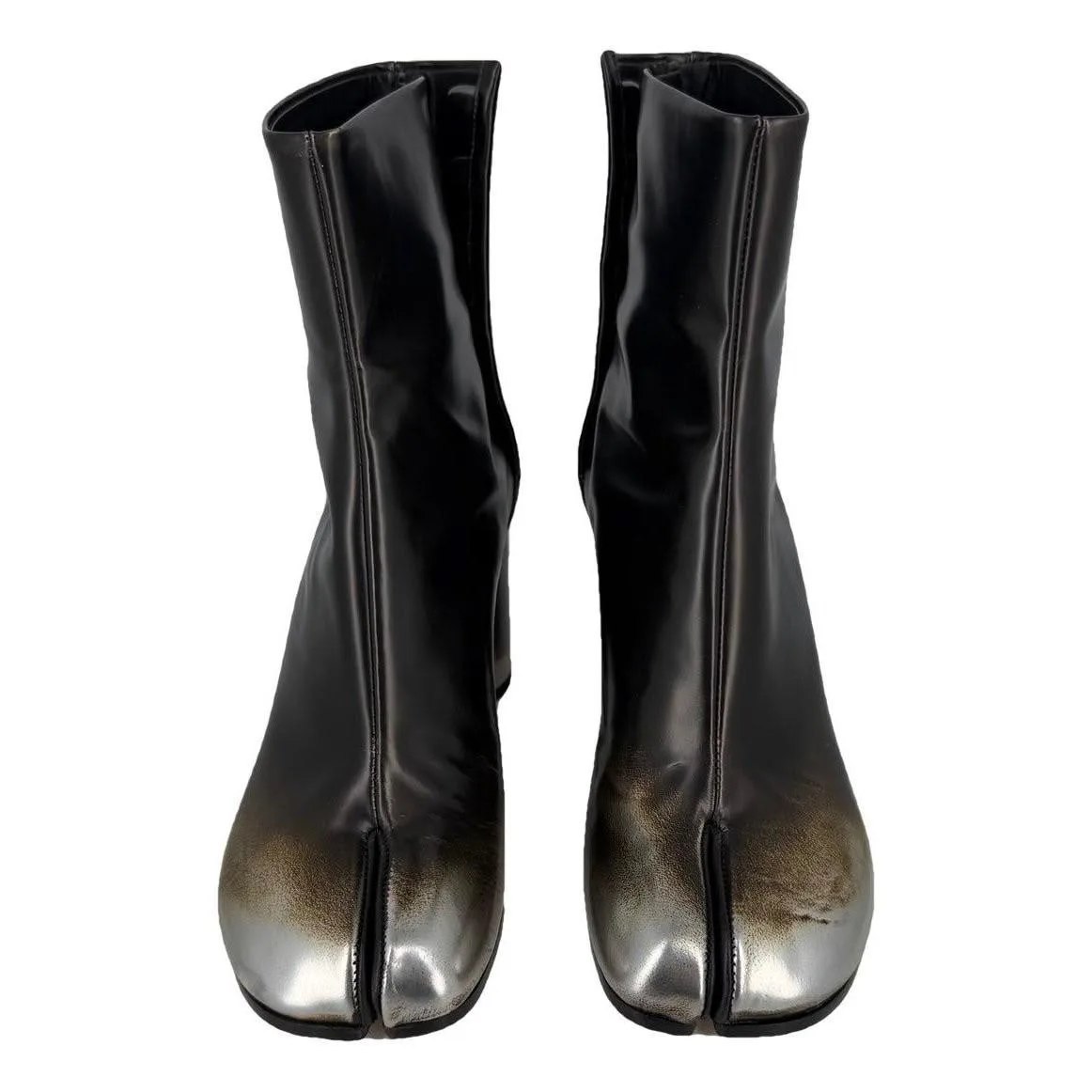
**Maison Margiela – Tabi Boots (1989 - Present)**
When Martin Margiela sent his models down a white-fabric runway in 1989 with their feet dipped in red paint, he left behind a trail of hoof-like prints that would haunt fashion forever. Inspired by 15th-century Japanese work socks, the Tabi boot’s split-toe design creates a glitch in the human anatomy. By altering the shape of the foot, even if subtly, Margiela invoked the uncanny – the psychological state where something familiar feels suddenly alien. The Tabi, omitting the fact that we might have gotten used to it today, didn’t just change how a person walked; it changed how they were perceived, moving the foot from a functional appendage to a site of avant-garde alienation.
These pieces show that the “natural” silhouette is just another convention waiting to be broken. The body, to them, is an ever-evolving project.
**CLOTHING AS POWER**
If we assume the body is unstable, then power – who holds it and how it is performed – can also be rewritten. For centuries, the wardrobe served as a rigid map of social and gendered boundaries: the suit represented the public-facing authority of the man, while the corset and lace signaled the decorative, private-facing role of the woman. The fashion revolutionaries of the late 20th century stripped these items of their original contexts,reassigned them to new owners, and became a means of seizing authority, reclaiming the gaze, and performing power in the light of day.
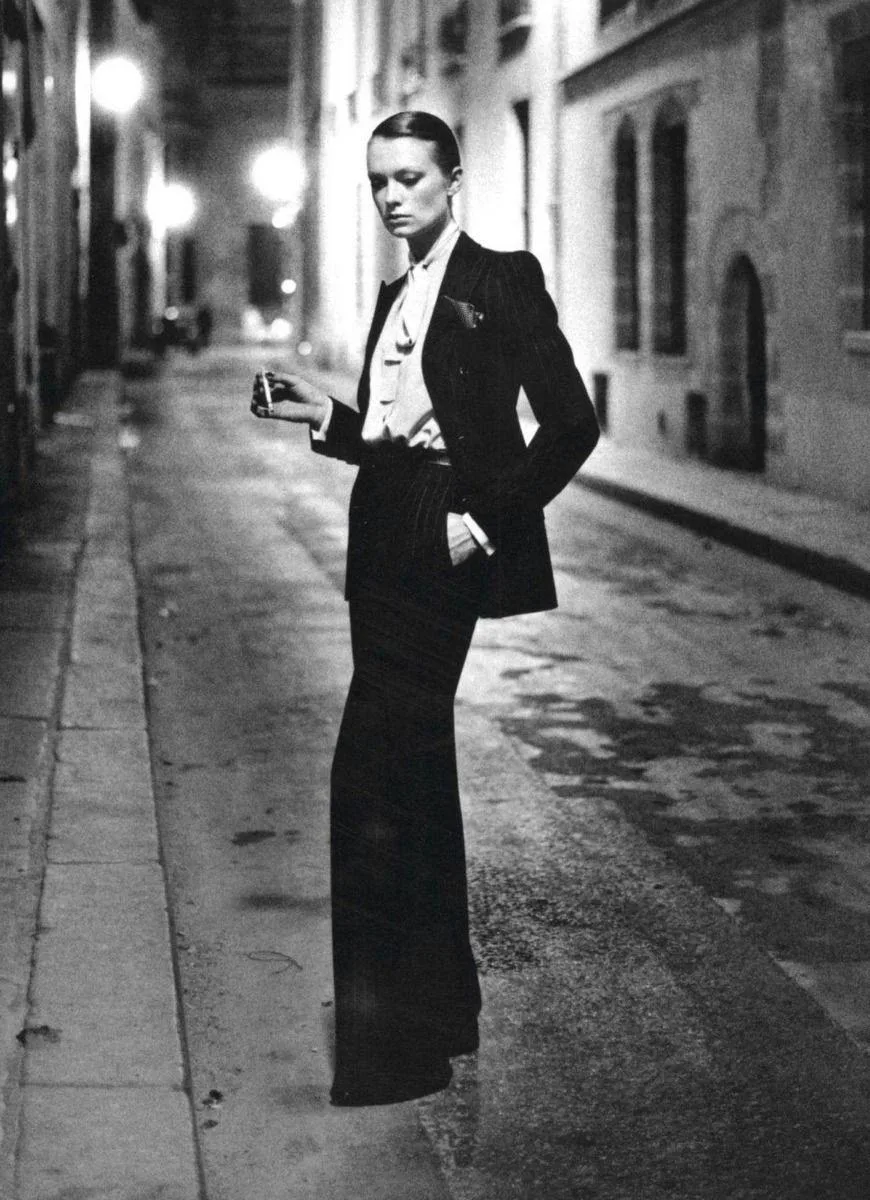
**Yves Saint Laurent – Le Smoking (1966)**
When YSL introduced Le Smoking – the first tuxedo designed specifically for women – it was so radical that women wearing it were famously turned away from restaurants like the St. Regis in New York. By adapting the sharp, vertical lines of masculine tailoring for the female frame, YSL did more than “borrow from the boys.” He provided women with a visual language of institutional authority and sexual autonomy. It was the first time the tuxedo wasn’t used as a costume for women, but as a permanent entry point into the spheres of power previously reserved for men.
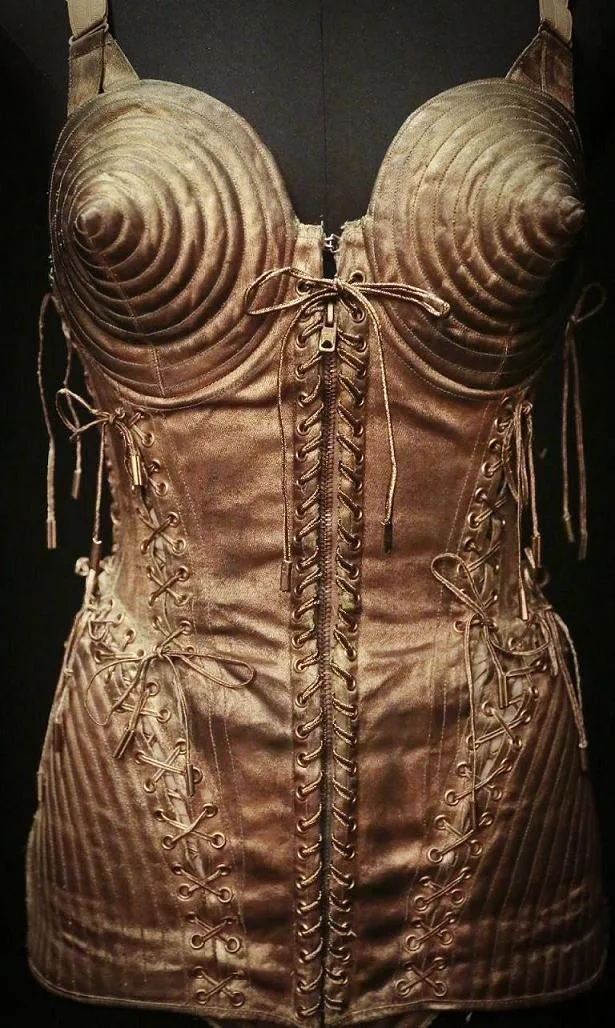
**Jean Paul Gaultier – Cone Bra (1990)**
Created for Madonna’s *Blonde Ambition* tour, Gaultier’s satin cone bra took the most intimate symbol of female restriction (the corset) and literally turned it into a weapon. By exaggerating the breasts into sharp, aerodynamic projectiles, Gaultier entirely flipped the script on the male gaze. The wearer was no longer a passive object of desire; she was a formidable, hyper-feminine aggressor. It is widely regarded as lingerie as armor, suggesting that a woman’s sexuality could be a source of outward-facing strength rather than a private vulnerability to be consumed.
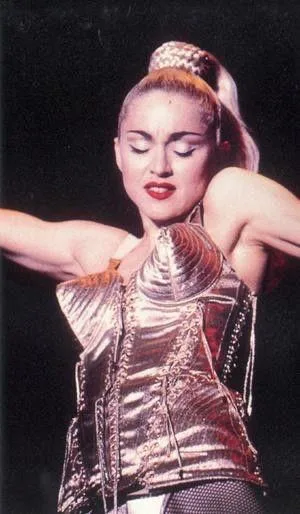
These public negotiations with power proved that the right garments could act as tools, previously used as historical suppression, and sharpened them into instruments of visibility.
**RUNWAY AS STAGE**
At a certain point, the garment alone was no longer enough. The runway itself evolved from a catwalk into a site of ritual, political commentary, and performance art. Designers began to realize that for a piece to be truly revolutionary, it had to exist within a narrative that challenged the viewer’s perception of time and space. In this arena, clothing could react to the environment around it, tell the story of migration, or transform in real time in front of an audience. This is where we are privy to the world in which a piece exists.
**Hussein Chalayan – “Afterwords” (Fall/Winter 2000)**
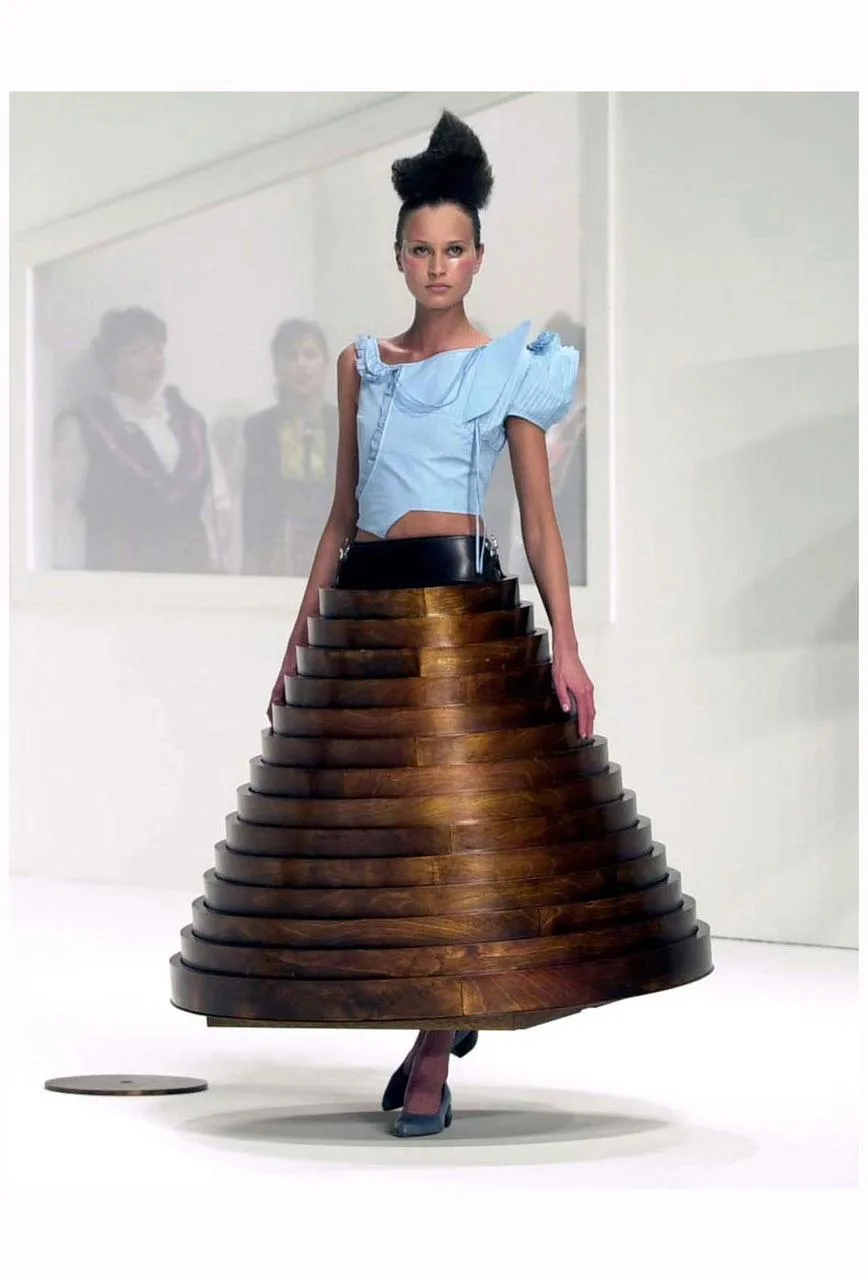
In one of the most daring displays in fashion history, Chalayan addressed the trauma of war and forced displacement. The show featured a stage set with minimalist furniture – chairs and a circular wooden table – which the models proceeded to transform. The chair covers were stripped off to become dresses; the table collapsed into a telescopic wooden skirt. Inspired by his own heritage in war-torn Cyprus, Chalayan turned furniture into “portable memory.” It was a profound statement on the refugee experience, proving that fashion could be a tool for survival, carrying one’s home on one’s back when everything else is lost.
**Viktor & Rolf – “Russian Doll” (Fall/Winter 1999)**
Viktor Horsting and Rolf Snoeren famously bypassed the traditional parade of models for a singular, high-concept ritual. Model Maggie Rizer stood on a rotating pedestal as the designers themselves meticulously layered nine couture garments onto her body, one over the other. Starting from a simple jute dress and ending with an intricate, 70-pound embroidered coat, the show was a commentary on the construction of fashion. It stripped away the commercial veneer of the runway to focus on the labor and the literal weight of the industry and showed how fashion could be about the physical act of dressing as a performative spectacle.
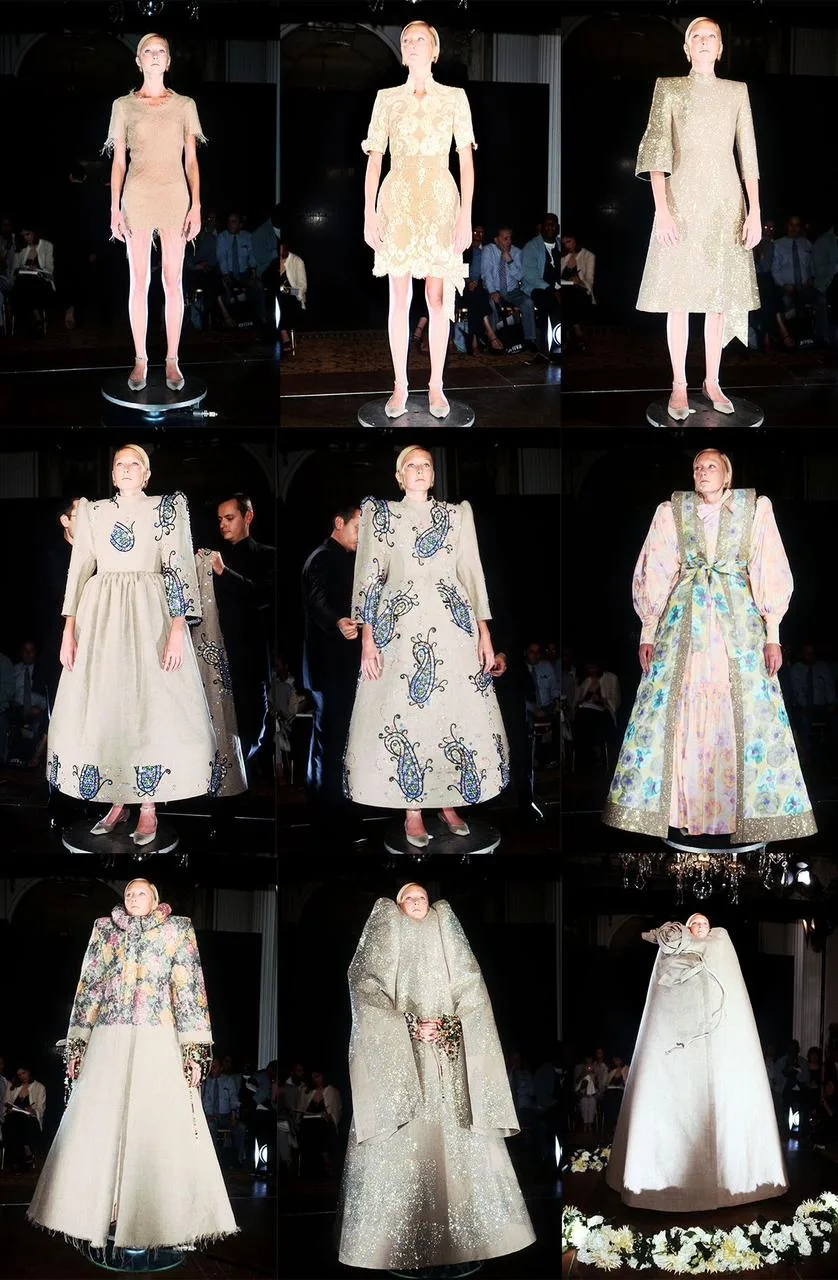
By turning the runway into a theater of displacement and process, these designers showed that the meaning of the garment would forever be tied to the moment of its creation, and that fashion is not just what we wear, but how we inhabit the stories we tell about ourselves.
**THE FUTURE ARRIVES EARLY**
Some designers were designing for a world that didn’t exist yet. They looked to the possibilities of industrial technology and biological systems for inspiration. They understood that to truly change the language of fashion, you must change the materials used to write it. Their pieces are what we call “technologically-evolved,” which are as much about scientific progress as they are about style.
**Issey Miyake - Pleats Please (1993 - Present)**
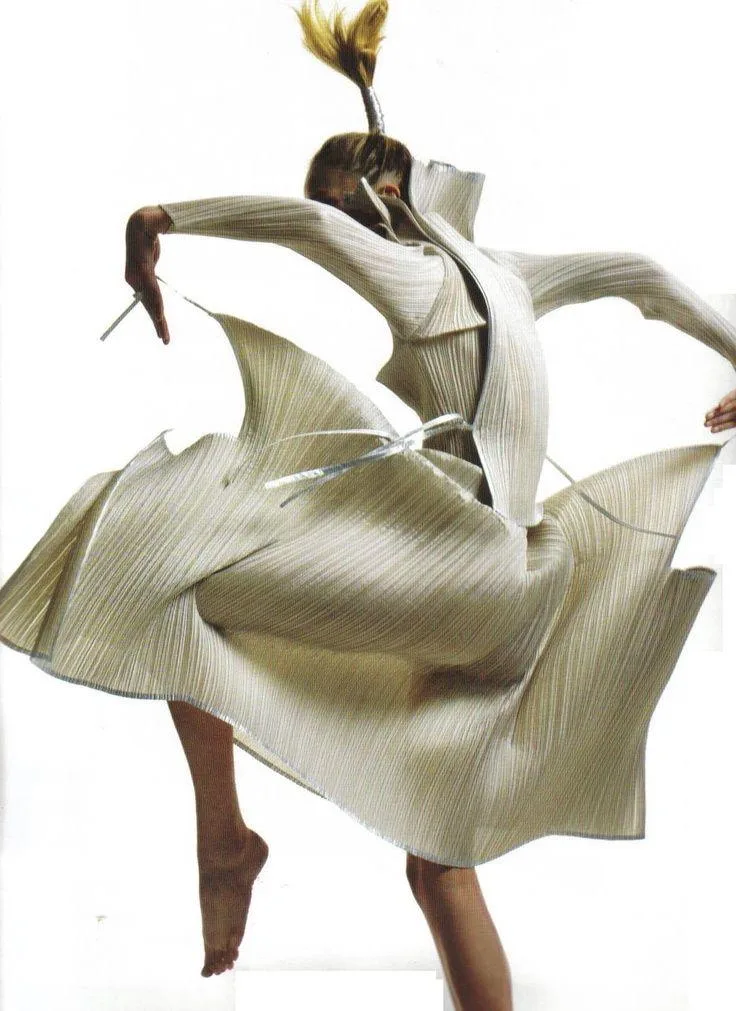
Issey Miyake invented a life-proof technology with this one. Launched in 1993, the *Pleats Please* line utilized a revolutionary heat-treating process where the garment was cut and sewn first, then fed through a press between layers of paper to create permanent, accordion-like folds. This inverted the traditional “pleat then sew” method, resulting in clothes that were lightweight, wrinkle-proof, and machine-washable. Miyake bridged the gap between avant-garde sculpture and daily utility, proving that high-concept fashion could – and should – live in the everyday lives of a mobile, modern global citizenry.
**Iris van Herpen – 3D Printed Designs (2010s)**
Since her 2010 *Crystallization* collection, Iris van Herpen has pioneered the use of 3D printing (additive manufacturing) to create garments that would be impossible to construct by hand. By collaborating with architects and scientists, she crafts intricate, sculptural forms inspired by cymatics, magnetic fields, and cellular biology. Her work treats the garment as a computational growth rather than a textile product. Van Herpen’s pieces are artifacts of “future-making,” suggesting a world where our clothing is as complex and responsive as the nature that inspires it.
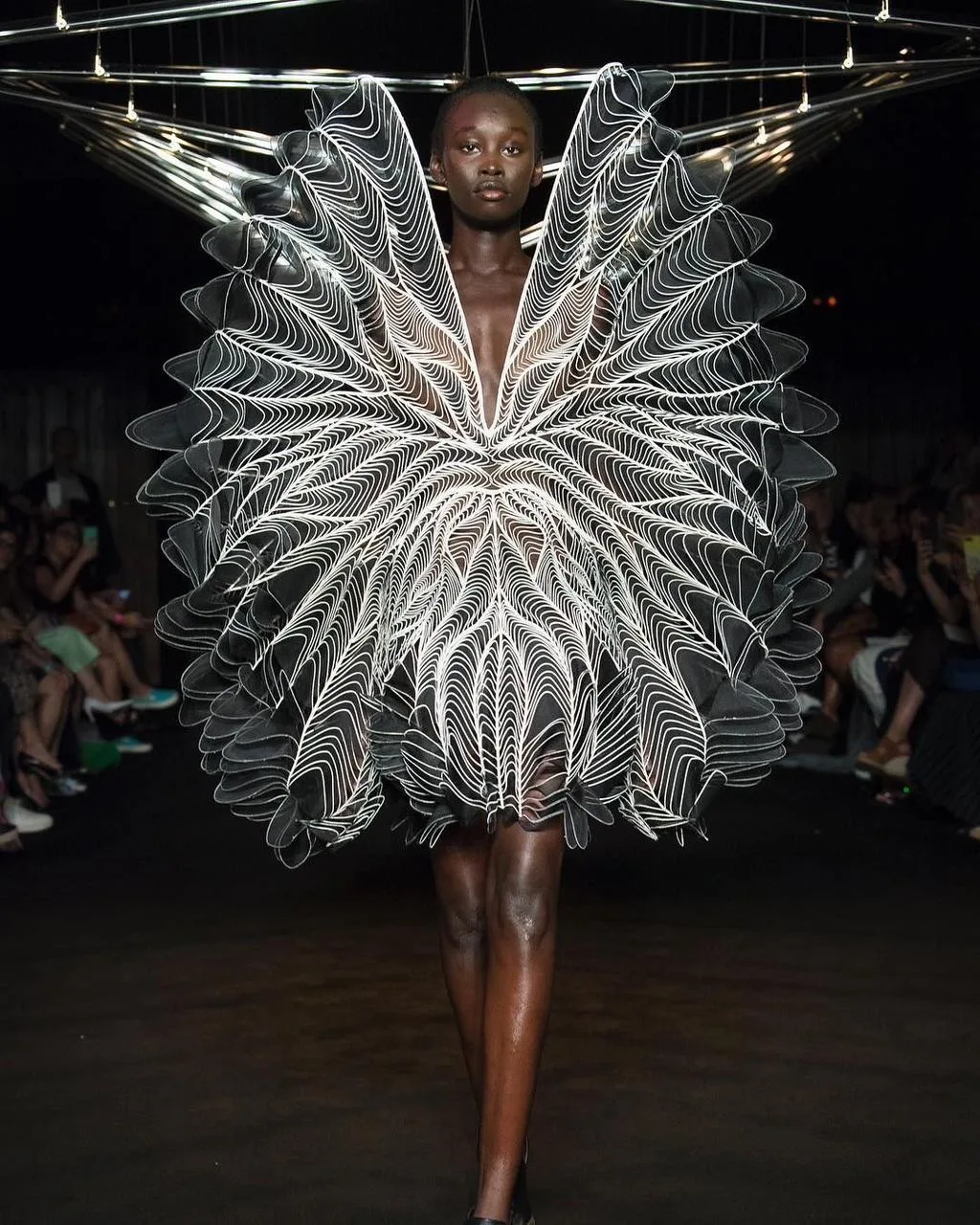
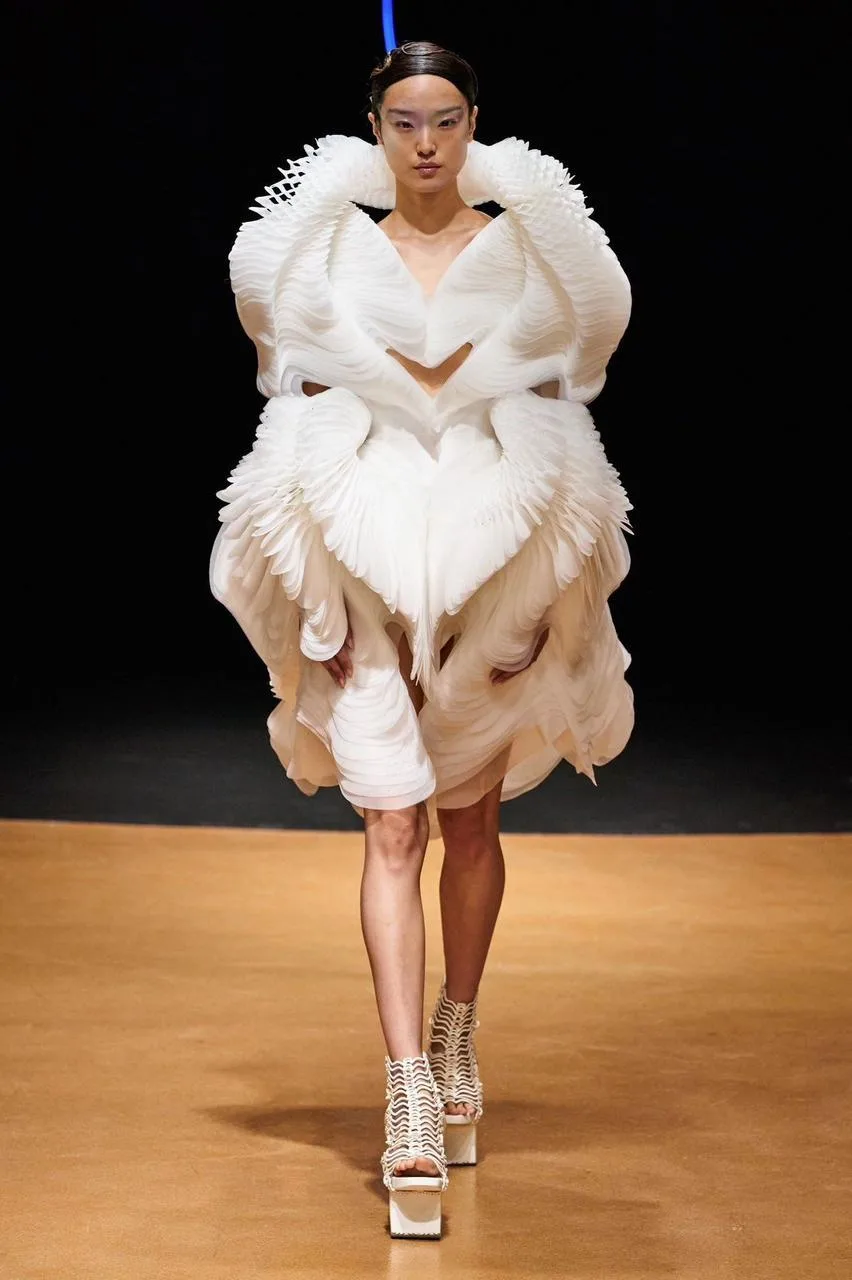
By embracing the machine and the algorithm, these designers didn’t just predict the future; they built it, showing us that the next era of fashion will be defined not by the needle, but by the code.
**RADICAL BECOMES FLUENT**
To look back at these archival landmarks is to realize that the most revolutionary garments don’t actually “mean” anything in a vacuum. Instead, they expand the boundaries of what fashion is permitted to express. They were the radical departures that, over time, became the foundation of our very own modern vocabulary. We see the DNA of these disruptions everywhere today. It is a testament to the power of the avant-garde: fashion evolves exactly like a language – slowly, through quiet shifts in tone, and then all at once through a singular, loud interruption.
These pieces did more than just decorate the human form; they taught us how to see differently. The most revolutionary garments integrate into our culture, shifting our collective perception until one day, what once felt shocking becomes fluent. As the dialogue between the designer and the world continues, we are left waiting for the next “glitch,” the next piece of clothing that will stop being quiet and start changing the way we speak.
**Written by:** Tayma Saliba **Editor’s Note:** Mo Sabra ***Spiral Journal*** **by Spiral Corner**