Rosalía - LUX
In a world of noise, Rosalía builds a cathedral. LUX is a sermon in flesh, faith, and sound.
Every few years, an artist arrives with a work that feels less like an album and more like an event a cultural recalibration. *LUX* is that moment for Rosalía.
In a world where sound is often manufactured for virality and images exist to please algorithms, Rosalía chooses the opposite: imperfection, devotion, the human voice. This is not pop engineered for playlists this is pop as prayer.
*LUX* is light, but not the kind that blinds the kind that reveals. It’s a return to the sacred, to the body, to the origins of her voice. There’s something almost spiritual about how she folds sound into silence, how her Arabic verses hum like forgotten memory, how her crown of bleached light turns pain into halo.
As *Spiral Corner*, we look at culture not as consumption, but as conversation. *LUX* stands as a reminder that art can still challenge, still breathe, still bleed. In her quietest moments, Rosalía sounds like she’s holding the world’s pulse in her throat trembling, divine, alive.
-**Mo Sabra, Editor-in-Chief**
The Anatomy of Divinity: A Return to Flesh, Faith, and Flamenco
When Rosalía entered the scene, she didn’t simply debut she detonated. What began as a voice echoing through flamenco halls of Catalonia became the pulse of global pop. From *Los Ángeles*’ stripped melancholy to *El Mal Querer*’s conceptual mythology, she stood at the intersection of tradition and revolution. Her voice pure, trembling, exact was the bridge between the sacred and the synthetic.
Then came *Motomami*: chaos, color, confrontation. The album ripped through expectation like a motor engine through glass. Critics called it polarizing; audiences called it strange. But it was freedom disguised as noise a manifesto that said, *I will not be caged by genre, gender, or God.*
Now, in *LUX*, Rosalía doesn’t just return she ascends.
A Sacred Rebirth
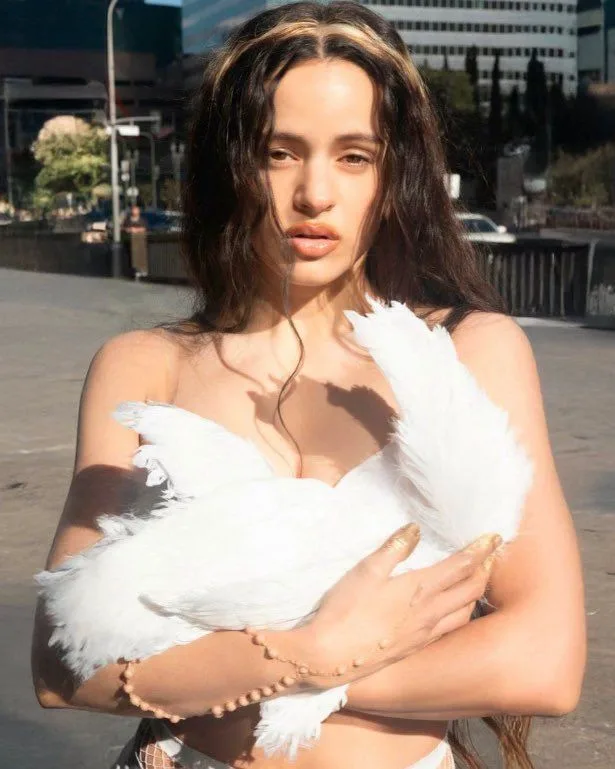
The *LUX* era feels like a resurrection. Announced through celestial visuals and monastic imagery, Rosalía’s fourth studio album is a study in duality fragility and strength, sin and sanctity, love and isolation.
In her Apple Music interview with **Zane Lowe**, she described *LUX* as “maximalist but in an organic way.” Unlike *Motomami*, which embraced the electronic and industrial, *LUX* is a living organism. Every breath, every creak of the studio, every imperfection in her voice becomes part of the production. She told Lowe that *LUX* “wasn’t made to sound clean it was made to sound real.”
This is not pop music engineered for virality; this is composition. Choirs were recorded live, strings bleed into the microphone, and even silence is treated as sound. Rosalía referred to *LUX* as “a body of work meant to be experienced as one piece like a film, or prayer.”
The Sound of Flesh
The album unfolds across **four movements**, each with its own tonal and emotional landscape. From the whispered intimacy of *La Yugular* to the operatic explosion of *Berghain*, *LUX* exists somewhere between cathedral and club.
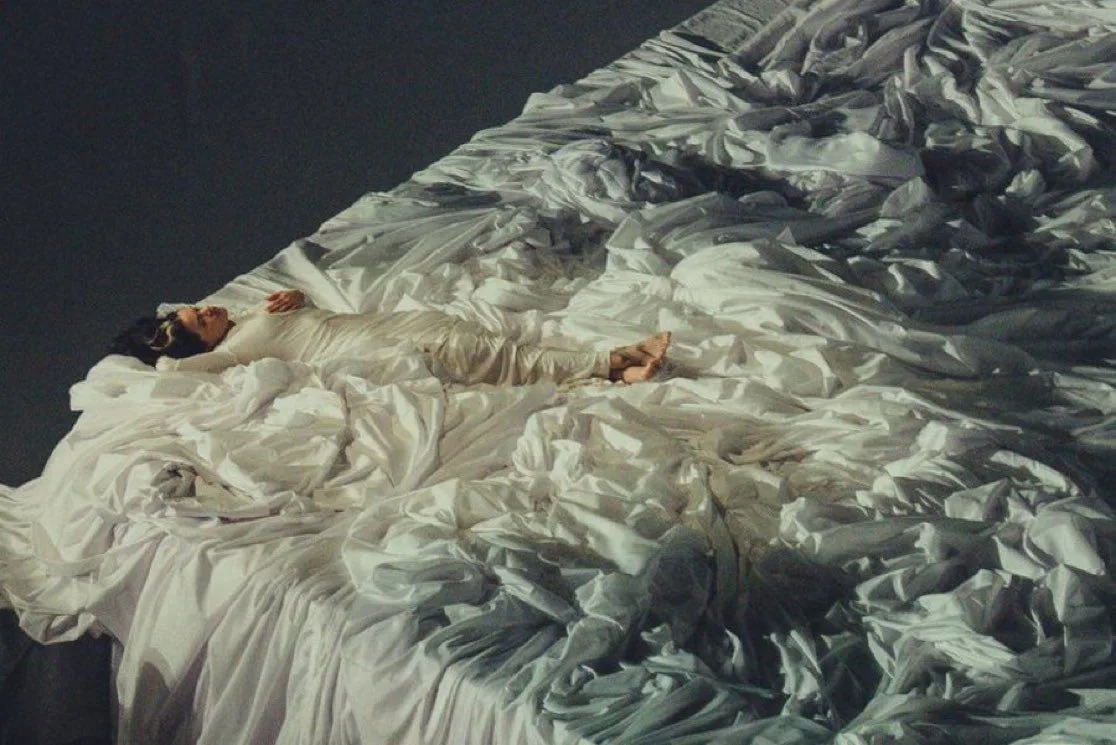
Every song carries the tactile weight of touch organic instruments layered with choir harmonies and raw percussion. There are no harsh synths, no polished electronic fillers. Instead, *LUX* breathes. It feels recorded in stone halls rather than studios.
Rosalía’s multilingual vocals expand this texture even further. She sings in **Spanish, Arabic, Portuguese, Latin, Japanese, and Catalan**, using each language not as ornament but as identity. The Arabic verses, in particular, stand as bridges reminders of shared histories between the Mediterranean, the Middle East, and the divine feminine.
Her voice doesn’t perform; it *possesses*. Sometimes angelic, sometimes fractured, always human.
The Fashion of Faith
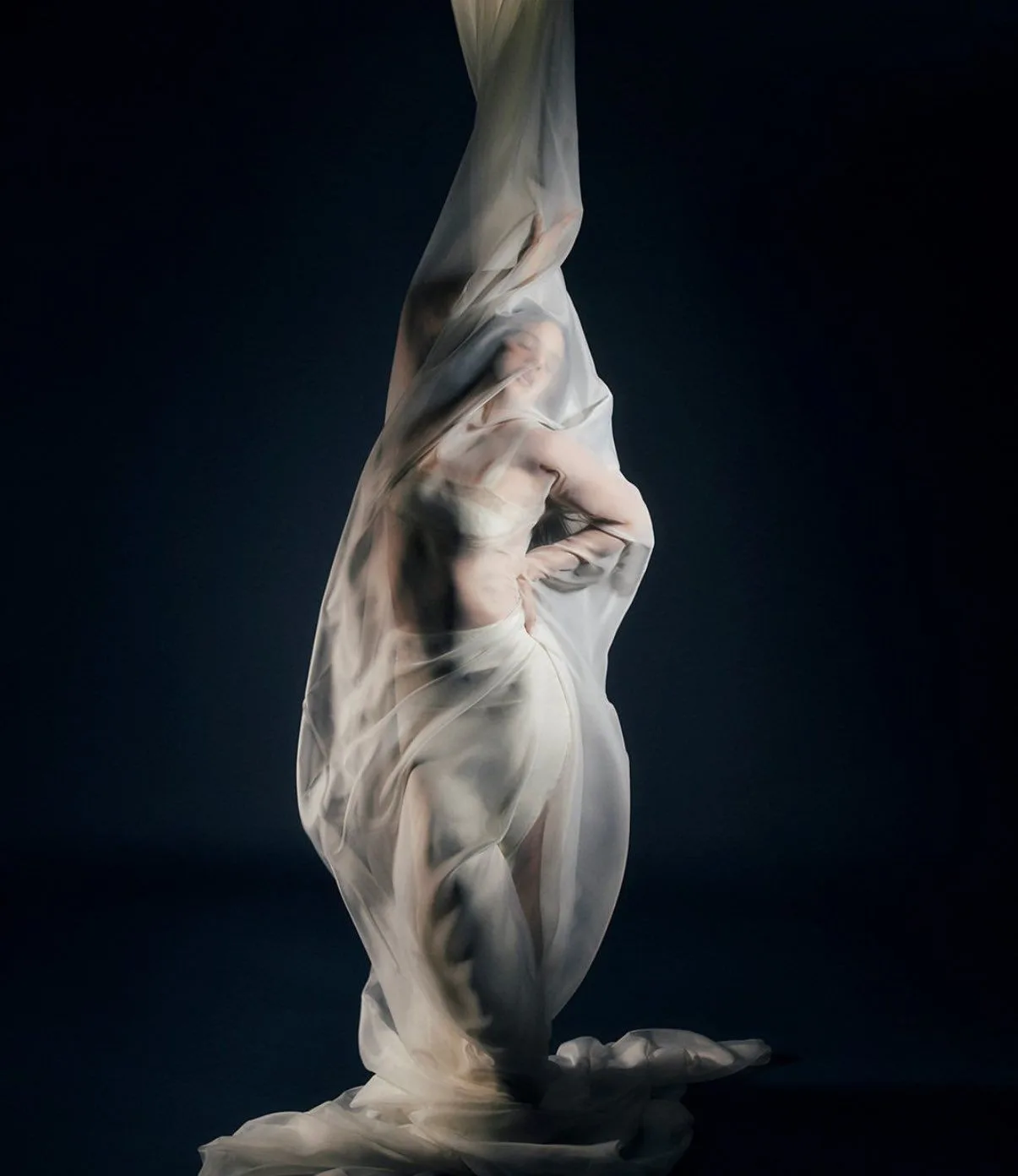
Visually, *LUX* is a study in devotion. Rosalía’s imagery pale garments, sculptural silhouettes, and her now-iconic **bleached blonde ring** around her head reinterprets the thorned crown of Jesus as a halo of resilience. It’s both sacrilegious and sacred, like everything she creates.
In photos and performances, she appears almost monastic clothed in white, her movements deliberate, her gaze unwavering. Fashion becomes theology: an act of restraint, of sublimation. The simplicity of her palette ivory, bone, dust places her in dialogue with purity, not as compliance but as rebellion.
She’s not dressing to please; she’s dressing to transcend. The pale aesthetic of *LUX* reflects its sonic texture clean, sacred, yet imperfectly human. In an industry addicted to spectacle, Rosalía’s visuals reject excess for essence.
The Architecture of LUX
The album’s title *LUX*, Latin for “light” reveals its core philosophy. Light not as brightness, but as revelation. Across its movements, the record maps the spectrum between despair and divinity.
Tracks such as *Memoria* and *Ceniza* carry the minimalist discipline of *Los Ángeles*, while *Berghain* introduces operatic German lyrics over pulsing rhythms, turning Berlin’s club culture into something ecclesiastical. The collaborations including voices from **Björk**, **Carminho**, and **Silvia Pérez Cruz** expand her sound into a transnational choir.
Each track is handmade, organically produced, free of digital artifice. It’s an album meant to be heard **in one sitting**, from beginning to end the way a sermon or spell would unfold.
The Spiral Corner Verdict
In a generation where music is engineered for playlists, Rosalía has built a cathedral. *LUX* is not made for skipping; it is made for surrender. It is **an act of resistance** against an industry that has forgotten how to feel.
The album’s organic production, its experimental structure, and its embrace of imperfection position it as one of the most significant artistic statements of her career. It’s deeply emotional yet technically disciplined, grand yet intimate the mark of an artist returning home, not to repeat herself, but to remind the world what art can still sound like when it bleeds.
Rosalía has always been a translator of tradition, of culture, of chaos. But with *LUX*, she becomes something else entirely: a vessel.
**Spiral Corner** calls *LUX* a **monument of sound and spirit** an album that defies genre, time, and algorithm. It’s not just to be listened to; it’s to be *experienced*.
*Front to back. Eyes closed. In one breath.*
**Written by:** Ingrid Mariela | **Co-Written with** : Mo Sabra **Editor’s Note:** Mo Sabra ***Spiral Journal*** **by Spiral Corner**