Poking and Prying: In Defense of Research
The deeply human work of doing it yourself.
I was having a discussion with my parents about a figure in history I was looking up when my father said: “why don’t you just ask ChatGPT?” I looked up at him from the middle of the paragraph I was reading, and something shifted. What he said immediately bothered me, even though he mainly said it so I could take a shortcut and get to my answer faster. But I didn’t want to take a shortcut. I wanted to look for that answer myself.
This is where I realized: AI has taken the pleasure out of research. Because yes, it is a pleasure. It is also a skill, the ability to dig deep into a subject and completely question what we know. If the answers lie there, available in mere seconds, what’s the point? The impulse to look for an answer is what I like to call “giving my brain a workout.” Research is the more common name for it, and it all starts at your desk.

A desk can be anything ranging from a table to a rug, to a computer, to a space in your mind. It is not, however, AI. A chatbot is not your desk. Your desk is your own unbothered space, and no matter what, it is the place where things pile up, organized or not. Currently, on my desk table, there are several books, notebooks, pens, candles, decorative figures, stacked up CDs next to the player, a tissue box, post-its, the lamp I have carefully chosen for the ideal ambiance, my glasses, and my laptop. Desks all look different, and they speak to people’s personality. But what a desk will always be home to is research. Archives, visuals, textbooks, experiments – whatever research is to you, whether you realize it is in fact research or not.
Desks were always shown to us. It was just a matter of whether we noticed them. Before research was something I associated with my own crowded desk, it was something I’d absorbed from screens. I think of Andie in the movie How to Lose a Guy in 10 Days, surrounded by magazine clippings and an overflowing inbox of ideas. Or Miranda Priestly’s table in The Devil Wears Prada which transforms into a visual dump when she’s working on a project. How their desks managed to look simultaneously chaotic and completely in control fascinated me. Now that I actually do this for a living, it isn’t even that far off. The image wasn’t lying, even though in the end, it was just a version of the thing shot for the frame.
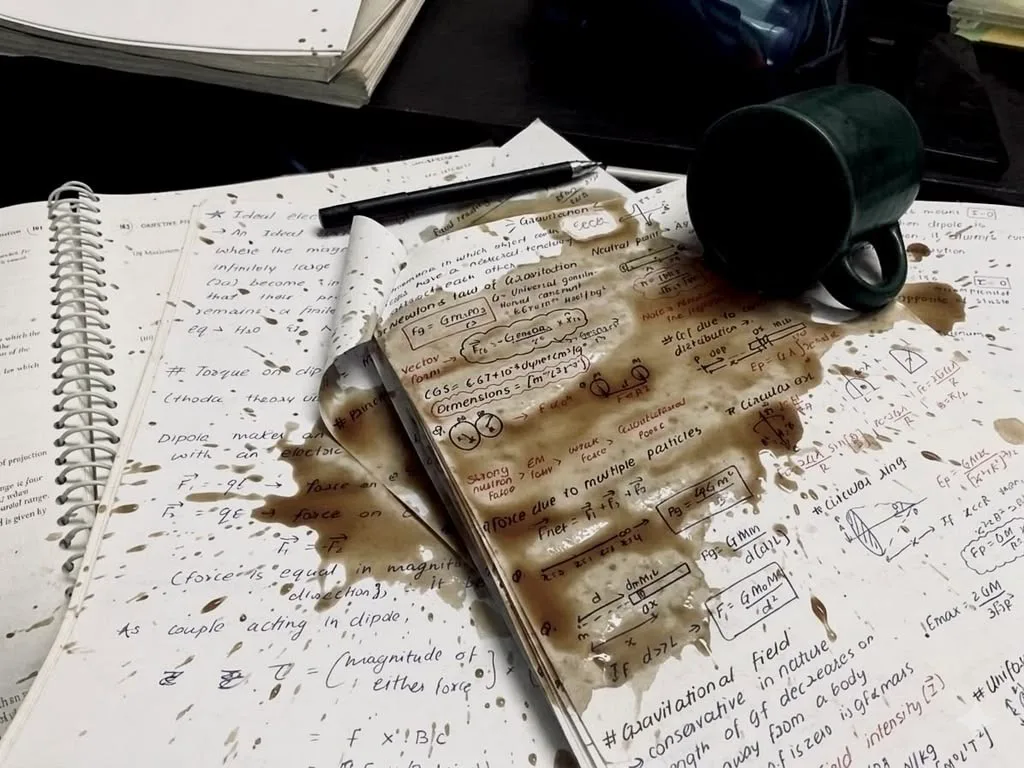
I find even more comfort in the desks of people who actually did the work, and I grew curious to see what my favorite writers’ desks looked like. Joan Didion’s, for example, was very calm and collected. It consisted of a clean surface, a typewriter, barely anything else, as if the research had already happened somewhere else and only the writing was allowed at the desk itself. Susan Sontag’s was the opposite: books stacked on books, spilling off shelves and onto the floor, her desk less a workspace than a single clearing. Toni Morrison’s looked like a scientist’s table with the way she had her lamp angled close, like a spotlight over the page, with loose pages half-shuffled and drafts marked up in pen. Their desks just accumulated, the way mine has, the way research does when you let it.
I was fascinated by the things that were on these writers’ desks because I thought: this is the material they use to write what I later read and love. This is their research, and who knows how many sources were used to get to that final product? Which brings me to my point, what AI cannot replicate, and which is the first step in research: curiosity. Zora Neale Hurston, an American anthropologist and writer, described research as this: “Research is formalized curiosity. It is poking and prying with a purpose.” Curiosity is a skill, the same way knowing where to look is a skill. You get better at being curious. You learn to notice the question behind the question; to refuse the first answer you’re given and follow a hunch instead. Hunches are adventures, and they come from your own head. Follow them. You can ask AI a question, but the wanting to ask isn’t something it can do for you.
What research brings to the brain isn’t just information, it’s texture. Every bit of it we dig up has context, a source, a moment of deciding whether to believe it or what else it could be connected to. You’re not just being handed an answer. An answer you are given slides right past you; an answer you work for gets lodged somewhere. And I’ll admit, sometimes the weight of the latter can be overwhelming – too many sources, too many threads, the sense that the more you learn, the more you realize you don’t know. But that overwhelm is doing something very useful: it’s forcing you to sort, to decide what matters, what’s noise, what belongs in a piece or what was just necessary to read in order to understand the rest. Again, it’s a skill. Research shouldn’t be easy. If it were, there’d be nothing left to ask, nothing left to argue about, nothing left to discover that wasn’t already sitting on the surface waiting to be picked up.
What surprises me most about research is how much of it stays with me. I have bits of information engraved in my mind that I can no longer trace back to their source. Most of it is music facts, obsessions I outgrew, the etymology of a word I now use constantly. I didn’t mean to memorize any of these. They just get in after I’ve spent long enough turning them over, yet another part AI cannot reproduce. Research, done deeply, becomes a part of how you think, the references you reach for without meaning to, the things you bring up at dinner because they surfaced unprompted from somewhere you’d forgotten you’d put them.
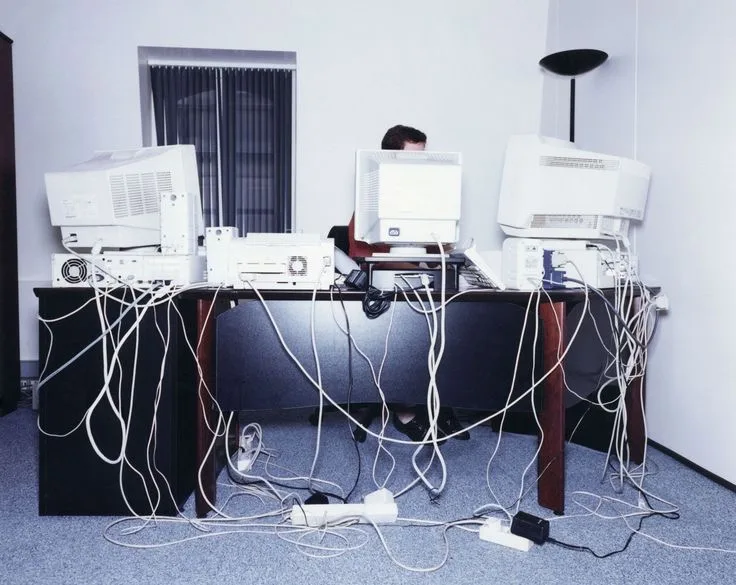
Research cannot be completed in “thought for 2 seconds,” as if that’s a unit of intelligence and depth is something to be compressed. It absolutely isn’t. Research is not a race to the cleanest answer. It is not a competition you win by getting there first. It is meant to be slow. It is meant to pile up. That pile is the proof of your work, proof that our brains are the ultimate thing to rely on. So let your desk be messy. Sit in front of a stack of books. Read the actual page, not the summary of it. Open those tabs. That “mess,” which I am now writing in quotation marks, is not a flaw in the system. It is the system – the only place real thinking will ever happen. So, let us protect and nurture our thirst to learn. There’s a desk waiting for it, somewhere, even if it’s just in our minds.
**Editor-In-Chief: Mo Sabra** **Written by: Tayma Saliba** ***Spiral Journal*** **by Spiral Corner**
Continue the exploration.
SPINE, the first issue by Spiral Corner, brings together 156 pages of fashion, culture, and emerging voices navigating a world in constant shift. From intimate conversations to visual stories, it captures people not as fixed identities, but in the process of becoming. If this piece spoke to you, SPINE goes further. Available now on **spiralcorner.com** Access also includes exclusive offers from our collaborators, including Antati Skin.