Nostalgia as Resistance: Why Gen Z Is Looking Back to Move Forward
Between memory, identity, and affect: what explains the return of nostalgia as a trend on and beyond social media.
Nostalgia is often dismissed as escapism a refusal to face the present. We disagree.
What we are witnessing today is not a soft longing for the past, but a deliberate act of resistance. In a world ruled by acceleration, automation, and emotional flattening, looking back has become a way to reclaim depth, texture, and memory. For a generation raised online yet starving for presence, nostalgia is not regression it is strategy.
This piece does not romanticize the past. It interrogates why Gen Z is reaching for it. From analog rituals to early-internet aesthetics, from music that feels lived-in to images that carry grain and imperfection, nostalgia emerges here as a language of survival. A refusal of endless optimization. A demand for feeling over performance.
At Spiral Corner, we are interested in culture where emotion precedes trend, and memory becomes material. This article sits exactly at that intersection — where affect, identity, and resistance collide.
-**Mo Sabra** Editor-in-Chief, Spiral Corner
Redefining Nostalgia
For a long time, nostalgia was treated as something negative. From the seventeenth century until the late twentieth century, the term was closely associated with psychological suffering, especially among people displaced by war or separated from their homes and families. In medical and historical discourse, feeling nostalgic was often framed as emotional fragility, tied to melancholy and depression.
But today, this way of understanding nostalgia no longer holds.
Recent research in psychology and neuroscience has reframed nostalgia as a powerful emotional resource. Revisiting affective memories activates brain regions linked to pleasure, comfort, and well-being, helping regulate emotions during periods of instability. Rather than trapping individuals in the past, nostalgia can offer emotional shelter in the present.
This is where Gen Z comes into focus.
Raised in digital environments, shaped by overlapping global crises, and living under the pressure of algorithms, hyperproductivity, and collective anxiety, this generation has turned nostalgia into strategy, not only as a trend. Whether through social media aesthetics, the return to analog practices, or shifts in cultural consumption, the past is being reimagined as a form of emotional care, identity-building, and cultural resistance.
More than longing, nostalgia becomes a conscious gesture: looking back to understand who you are and how you want to live now.
Nostalgia and Gen Z: The return of 2016 as a cultural symptom
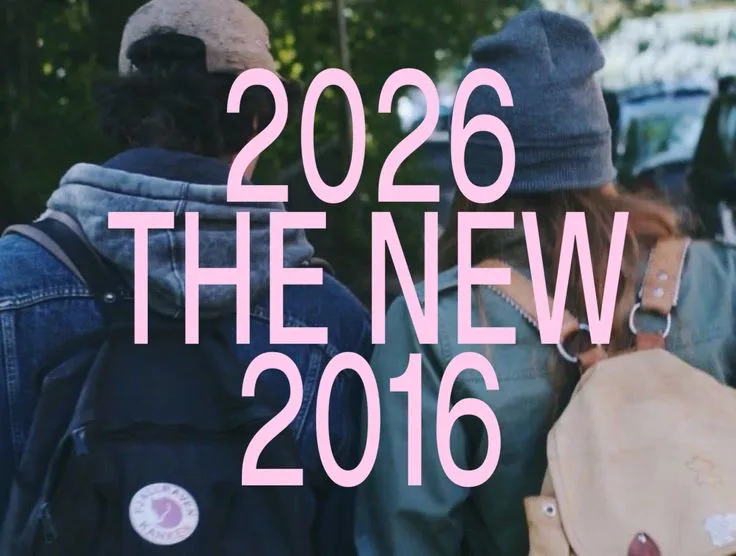
It is no coincidence that 2026 has been widely referred to on social media as “the new 2016.”
Across TikTok and Instagram, 2016 has resurfaced as an aesthetic, a shared memory, and an emotional point of reference. Rosy filters, Snapchat references, mid-2010s music, and intentionally imperfect visuals are not just playful throwbacks. They activate a collective imagination of a time perceived as simpler, more spontaneous, and less performative. The power of this return lies less in the year itself and more in what it represents.
For many young people, 2016 symbolizes a moment before algorithmic saturation, before productivity obsession and constant self-performance became the norm. It was a messier, less polished internet and precisely because of that, a more human one.
This movement reveals why nostalgia occupies such a central place today. First, there is the emotional bond with the past. In times of social, political, and technological uncertainty, revisiting shared memories offers continuity and comfort. The past becomes a place of safety when the present feels overwhelming.
Second, nostalgia plays a key role in identity formation. By reclaiming old aesthetics, habits, and references, Gen Z does not simply consume nostalgia, it reshapes it. The past becomes raw material for experimenting with style, storytelling, and ways of being that push back against the uniformity of current digital culture.
There is also a shift in consumption. The renewed interest in physical media, analog technologies, and experiences less mediated by algorithms points to fatigue with digital acceleration. Nostalgia emerges as an invitation to slow down, to choose more intentionally, and to reconnect emotionally.
And perhaps most importantly: belonging. In a hyperconnected yet emotionally fragmented world, shared nostalgic references create bonds. A song, a filter, or a familiar memory quietly says: *you’re not alone.*
Nostalgia, Memory, and Affect: The Body Remembers Too
Nostalgia does not live only in memory it moves through the body.
Studies show that stimuli such as music, images, textures, and colors can activate intense autobiographical memories, generating feelings of comfort and emotional stability. Nostalgia is not a distant recollection; it regulates emotion, organizes feeling, and helps make sense of experience.
Music plays a central role in this process. When sound and memory converge, emotion deepens. A song does not merely recall a moment , it recreates its emotional atmosphere. This may explain why nostalgic playlists, edits, and “core memory” content circulate so strongly among Gen Z.
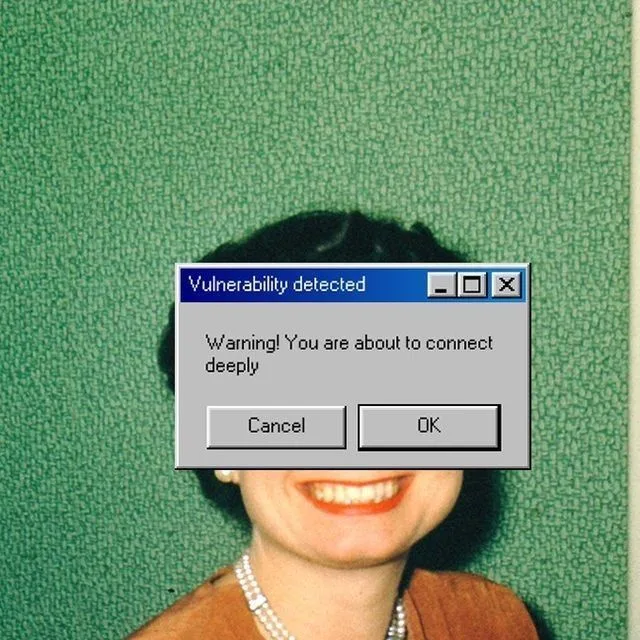
This experience is rarely individual. Nostalgia is also collective. It is built from shared emotional archives: cultural moments, technologies, aesthetics, and rituals. When young people engage with nostalgia online, they are participating in a collective act of recognition.
Fashion and aesthetics intensify this dynamic. Certain clothes, accessories, or filters do more than signal style, they evoke feeling. Nostalgia becomes an affective language: we feel before we explain.
Materiality is key here. Vinyl records, analog cameras, and printed photographs require time, touch, and attention. Their weight and texture invite presence. The experience slows down and in doing so, becomes more meaningful.
Analog Escapism: Gen Z, AI, and the Search for Authenticity
The more digital the world becomes, the more the analog begins to feel like refuge.
In a landscape shaped by artificial intelligence, accelerated production, and constant stimulation, the desire for pause grows stronger. The return to analog practices is not only aesthetic. It carries a form of cultural and ecological resistance, connected to sustainability, conscious consumption, and more careful relationships with objects and processes.
Analog practices offer something increasingly rare: a sense of presence and choice. Unlike instant digital interfaces, they demand involvement, attention, and time.
Anthropologists such as Tim Ingold and Daniel Miller emphasize that objects shape relationships and ground human experience. Touching, caring for, and using things creates connection. The crackle of vinyl, the grain of film, or the weight of an old camera activate the senses in ways digital systems rarely do. Consumption becomes less automatic. Creation becomes something lived.
In this context, imperfections gain value. Noise, wear, and traces of time interrupt digital smoothness and remind us that there is process, history, and human presence involved. The analog comes to symbolize something real in a world of endlessly reproducible content.
Gen Z’s interest in the past, then, is not only nostalgic it is existential.
Raised under constant connectivity and ultra-processed content, this generation lives with sensory overload and a lack of embodied experience. Nostalgia emerges as a response: a way to reclaim the body, time, and meaning.
Looking Back Without Escaping the Present
Nostalgia does not call for rejecting technology, but for rethinking how we live with it. Looking back does not mean denying the present or idealizing the past. It is a way of insisting that progress does not have to erase emotion, texture, or memory. The challenge is not choosing between analog and digital, but allowing both to coexist in a more human way.
In this sense, nostalgia functions as a bridge: a space of passage and connection to what we can still touch, feel, and recognize as our own. Amid continuous acceleration and the logic of hyperconnection, it invites us, first and foremost, to reconnect not with numbers or metrics, but with ourselves. It is an inward dive through memories, affects, and a sense of time that is not organized solely by the clock, but moves across past, present, and the possibility of a future with different possibilities.
**Written by:** Marianna Mayumi Spaciari Tasaca **Editor’s Note:** Mo Sabra ***Spiral Journal*** **by Spiral Corner**