Lebanon Has No Voice, So Who’s Performing It?
How a generation of creatives has become the country’s voice in the absence of one.
Today, our generation has become the closest thing Lebanon has to an official voice.
Not elected. Not appointed. But undeniable.
We are the ones shaping how this country is seen, remembered, and understood. Through our colors, our images, our words, our sounds we are constructing an identity in real time, without permission, without structure, and often without support.
But with that comes responsibility.
Because when a country exists through its people, every image matters. Every word carries weight. Every aesthetic choice becomes political, whether we intend it or not. It is no longer enough to create we must create with awareness, with precision, with intention.
We are not just expressing ourselves.
We are speaking for something larger.
And if we are the ones holding the narrative now, then we must ask ourselves are we building something that reflects truth, or something that simply looks like it?
This is where it begins.
-**Mo Sabra** Editor-in-Chief, Spiral Corner
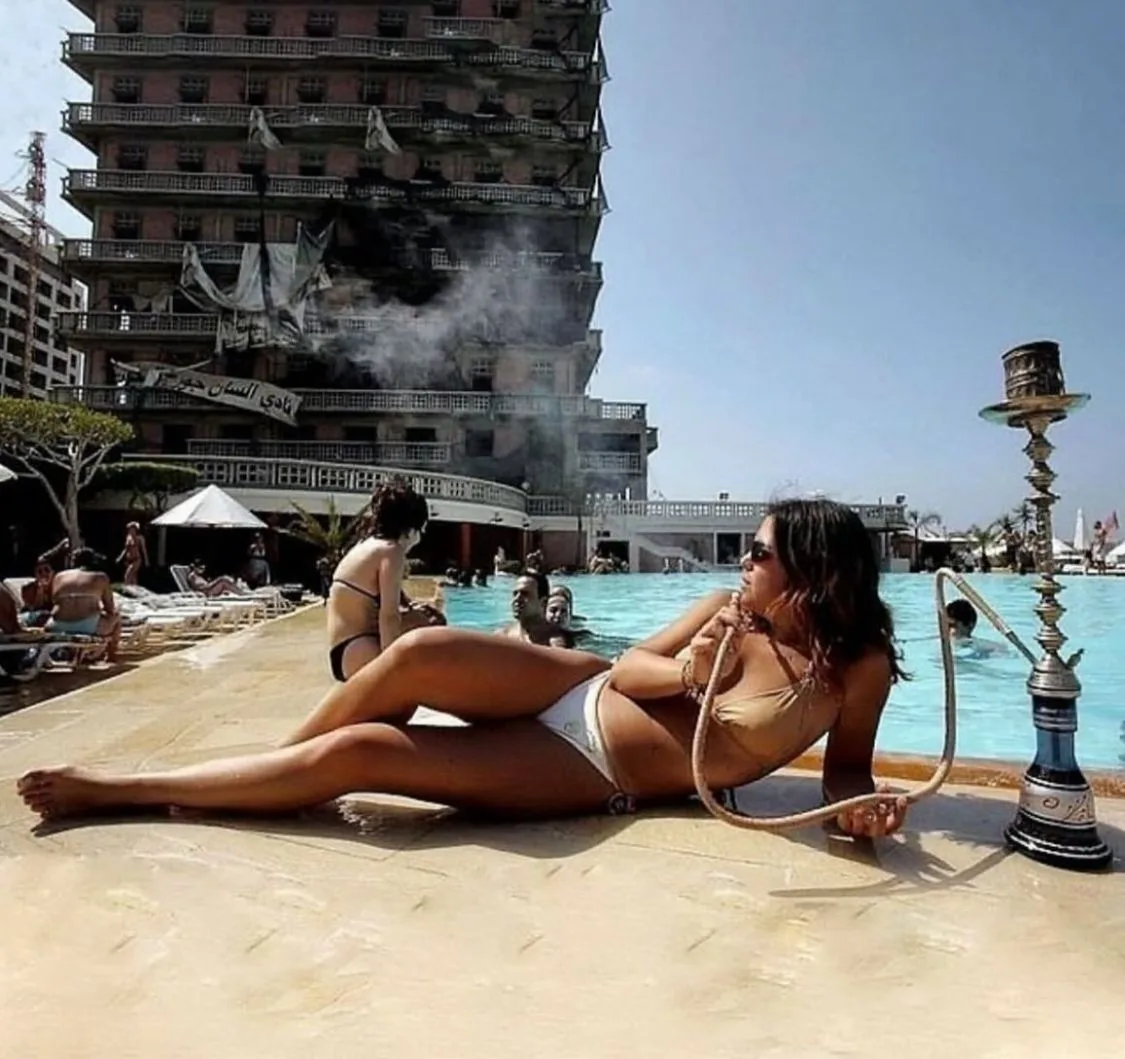
For a while now, Lebanon has become a feeling – circulating, stylized, endlessly reframed. A place that travels through images and frames before it registers as reality. It is consumed before it is ever understood.
How do you even define a place that its own people can no longer precisely define? A country described in fragments – unstable, collapsing, improvised – words that attempt to contain it, yet never fully land. The word “country” seems so off all of a sudden. What is a country to Lebanon?
Ask anyone abroad, and they’ll describe Lebanon in words pertaining to mood. A campaign shot on a balcony in Beirut at golden hour. A voice that sounds like longing, most likely Fairuz. A face, a silhouette, a fragment of nightlife. Collapse doesn’t reach them as often. They won’t know about the outages, the absences, or the systems that no longer function.
The tables have turned. And if you look closely, you’ll see that this has been happening for a long time. Lebanon’s image is no longer state-produced, nor shaped by institutions. Nobody will listen to them. Today, Lebanon’s image is constructed and exported by its youth – by those with no official authority, by a generation turning visibility into its own form of power.
In the absence of representation, they didn’t wait. They began to create it themselves.
The Rise of Fragmented Authority
This failure isn’t sudden. The Lebanese state has gradually lost its ability to represent itself, both internally and outwardly. Cultural diplomacy has faded into silence, narrative control has dissolved into competing fragments, and what remains of political communication often feels disconnected from the reality it claims to address.
In that space, there is nothing but stagnation – recycled rhetoric, delayed responses, and a global presence that carries little weight beyond crisis headlines. There is no unified national voice, no coherent story being told on behalf of the country. Only fragmented authority, each speaking without being heard.
But there is one thing we must remember: when a country stops speaking for itself, its people start speaking in its place.
In Lebanon, this role has been assumed by a generation of creatives who now function as cultural diplomats, identity designers, and narrative engineers – whether or not they asked to be. Their work starts with expression and then becomes infrastructure for perception.
The Unofficial Ministry: Creatives as Image-Makers
In fashion, clothing is longer just aesthetic – it is messaging. Styling, upcycling, layering, and reconstruction often reflect unstable reality as much as artistic intent. A look is never neutral. It is a statement about survival and reinvention. Designers like Salim Cherfane, through his 2021 collection titled Curse of The East, channel regional instability into narrative-driven design, using fashion to reflect resilience and the desire for normalcy amid crisis.
In visual culture, Lebanon is constantly being reframed, re-lit, and re-edited though the lens of photographers like Myriam Boulos, whose work – also recently featured within the visual campaign around Harry Styles’ latest album – captures the city’s intimacy and unrest in equal measure. At the same time, the emergence of painting exhibitions across the city continues to expand the visual language through which Lebanon is expressed, adding yet another layer of interpretation, abstraction, and introspection to its cultural landscape.
In music, sound carries language, mood, and identity all at once. It travels in a way that politics cannot. The world may not fully understand Lebanon through policy, but it recognizes it through tone, texture, and emotion. Artists and bands like Taxi 404 embody this hybridity, blending indie pop with French rap into a sound shaped by movement and memory. Their music reflects the fluid nature of an identity rooted in Lebanon, yet shaped across borders, carrying a sense of dual belonging that goes beyond geography.
More than documentation, these artists are deciding how Lebanon is seen, and by extension, how it is remembered. They refuse to stay silent. They collect donations through their art in times of war. They fight to stay.
Drawing, Stitching, Sewing an Identity
Lebanese youth are sketching, drawing, stitching, and sewing their country’s reputation into existence.
Sketching begins on paper, in notebooks, on scraps, in margins – quick, unfinished lines that test an idea before it fully exists. Drawing refines that impulse. Lines become deliberate. Forms take structure. A silhouette starts to emerge, an outline that suggests what something could become, even if it hasn’t yet been built in reality.
Stitching brings these fragments together. Separate elements are connected, layered, and aligned. It is the process of holding things in place, making them relate to one another so they begin to function as a whole.
Sewing is the final act of construction. It is where these parts are fixed, reinforced, and completed into something that can stand on its own. It happens in bedrooms turned into studios, in late-night edits, in garments assembled from limited resources and available materials. Identity is pieced together through fragments of visuals, sounds, references, and instincts that are held together until they read as one.
Politicians draft speeches; creatives draft silhouettes. Politicians negotiate power; creatives construct visuals. Politicians produce inertia; creatives produce relevance.
While politicians negotiate borders, youth negotiate perception.
A Freelance Identity
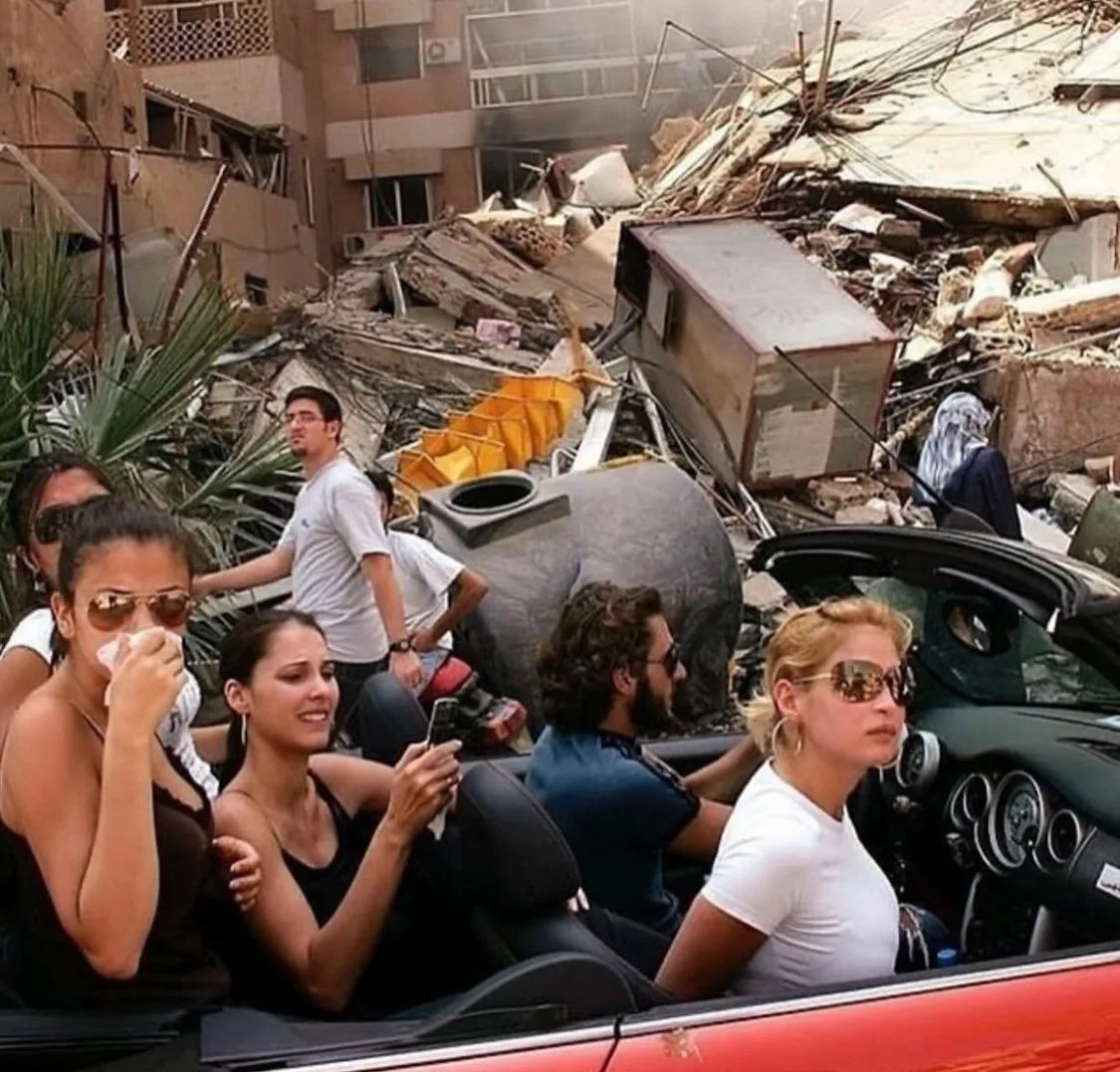
From the outside, Lebanon appears more alive, more dynamic, and more culturally present than on the ground. It might often be interpreted as curated chaos, aestheticized struggle, fragments of resilience. The world engages with Lebanon as an aesthetic experience rather than a structural reality. It consumes its atmosphere without necessarily confronting the conditions that produce them.
Hence why what sustains this visibility is also what strains it.
For Lebanese creatives, there is little separation between creating and coping, especially today, in a reality where war is never entirely past. And now, there is the responsibility of representing something larger than oneself. To speak not just as an individual, but as a proxy for a place, a history, a mood that is constantly being interpreted from the outside. Still, they keep going, as Lebanese people are known to do, and they create, create, create.
In the end, what is so intricately beautiful about Lebanon is that no single voice defines it. But we have established that we are no longer talking about a definition on the state level. This is about art. This is about the identity that operates in parallel tracks – built through visuals, sounds, personal narratives, and independent perspectives. A freelance identity. Produced project by project, creator by creator, without a central authority shaping its direction. Lebanon is the particular case where coherence emerges from accumulation, not control.
Built from Fragments
Lebanon may not function as a state in the traditional sense, but it will always function as a cultural presence. It exists in pieces, but there are people, fragments in themselves – working, making, showing up – each carrying a part of it with them.
And somehow, through that accumulation, something holds. A quilt – stitched, visible, and impossible to ignore.
**Written by:** Tayma Saliba **Editor’s Note:** Mo Sabra ***Spiral Journal*** **by Spiral Corner**