A Deep Fashion Take on Rama Duwaji, New York’s Young First Lady
Inside Rama Duwaji’s Radical Minimalism: The Quiet Power of New York’s First Lady of Art and Restraint.
When history moves, it often does so quietly in the pulse of cities, in the fabric of what people wear, in the hope that begins to feel possible again. Zohran Mamdani’s election as the first South Asian and Muslim to govern New York City is one of those moments that transcends geography. It’s more than politics; it’s representation finally finding a seat in the room where decisions are made.
For so many young boys and girls around the world especially those who grew up feeling like their names, their faiths, their identities were too foreign, too complicated, too “different” this is a reminder that the world can shift. That a new generation is not just watching history unfold, but writing it.
And beside him stands Rama Duwaji an artist, a first lady who redefines what elegance means when it’s stripped of pretense and performance. Her quiet strength mirrors the spirit of this moment: unafraid, intentional, deeply human.
At *Spiral Corner*, we believe culture and politics are inseparable. Style is language, and leadership, too, has its own aesthetic. This piece explores not only Duwaji’s wardrobe, but also the poetry of change how fashion, identity, and power intertwine in the making of a new era.
-**Mo Sabra, Editor-in-Chief**
Zohran Mamdani’s victory changed the map of New York politics overnight but it was the quiet, exacting presence beside him that turned heads in a different way. Rama Duwaji has arrived into the public eye not as a politician’s accessory but as a visual and cultural cipher: an artist who dresses like an argument. Her first public moments as New York’s new first lady felt carefully minimal and unusually modern a kind of aesthetic diplomacy that says as much about who she is as any press release.
At first glance: restraint as strategy. For her earliest appearances since the victory, Duwaji opted for pared-back, nearly monastic silhouettes a simple black outfit that reads at once as mourning and couture, monk and manifesto. That choice is not accidental. Going monochrome and plain is a classic move for figures who want attention for their ideas, not their wardrobes; yet Duwaji’s black is not bland. It’s textured, artist-quiet a canvas that allows the viewer to project political and personal narratives onto the body. Reporters noted the look for its simplicity; the image of “elegant black” as her initial public uniform has already collected headlines.
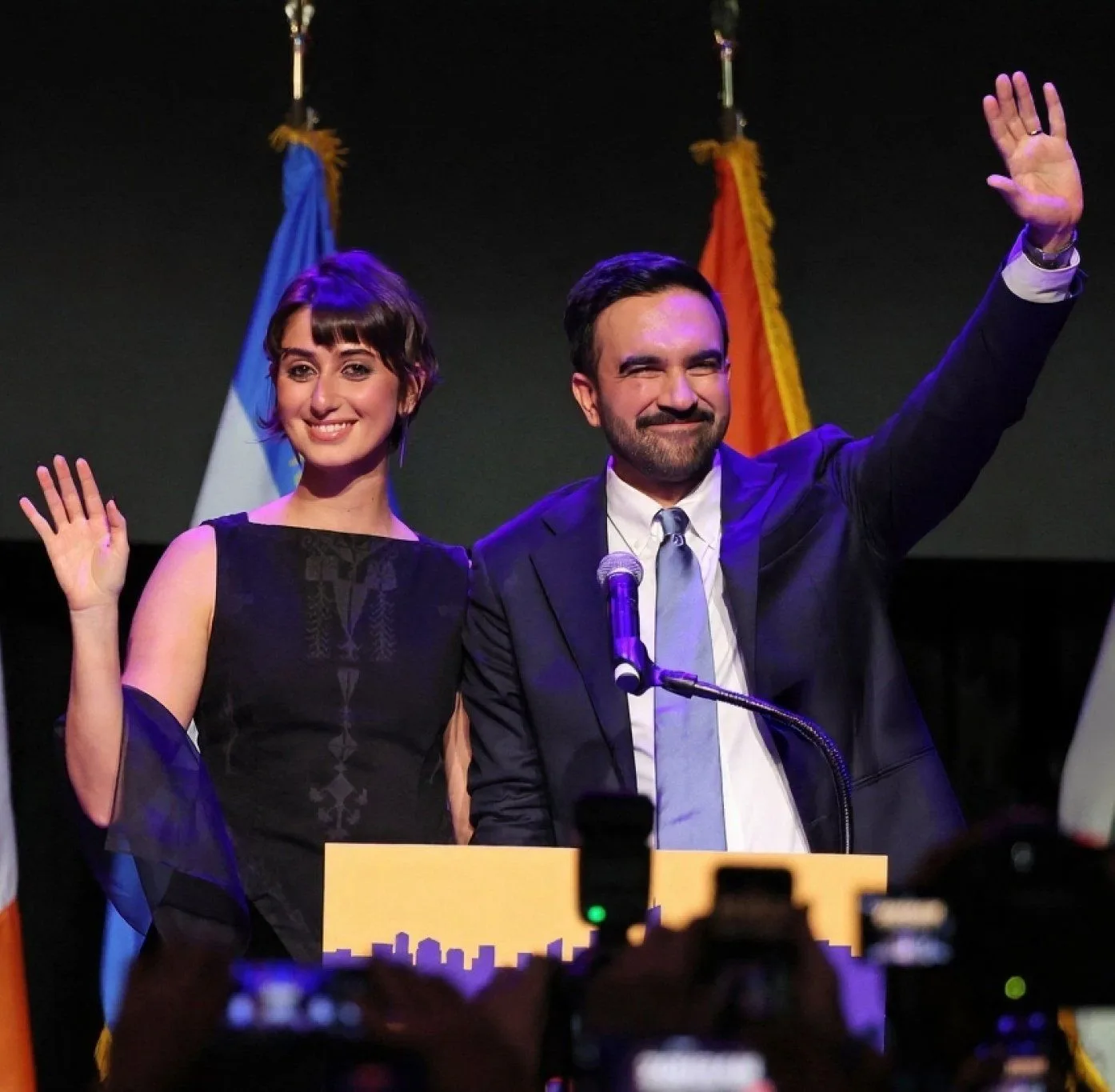
Why it matters: clothing as positioning. Duwaji’s public style performs three moves at once. First, it shields: in the fraught, hyper-visible moment of a historic mayoral win, she resists spectacle and thus protects a private self. Second, it signals intellectual seriousness black is a longtime language of artists, critics, and people who want to be read rather than ogled. Third, it opens a rhetorical space for the city’s new narrative: youthful, diasporic, politically charged but emotionally cautious. As the youngest first lady and someone of Syrian descent, her presence disrupts expected civic imagery; her clothes make that interruption legible without screaming.
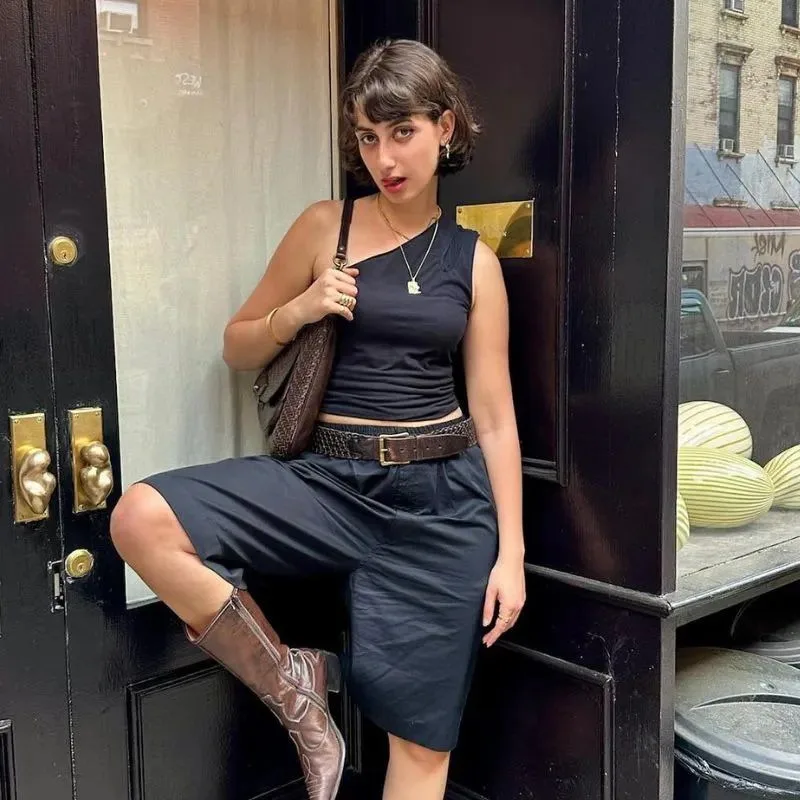
Aesthetic lineage and reference points. If we place Duwaji’s look on a map of contemporary cultural codes, it sits at the intersection of art-school minimalism and Gen-Z curatorial irony. Think of a painter who learned restraint from monochrome practice and irony from social media the result is dresses that could be at once studio wear and red-carpet kit. The silhouette is close to the body but not body-obsessed; necklines and hems are unprovocative, but the tailoring is precise a mature designer’s hand rather than fast-fashion mass. This is someone who understands how absence (of ornament, of color) becomes presence. Sources describing her background as an artist and her low-key public role help explain that approach.
Materials, texture, and implied collaborators. We do not yet have a catalog of designers she prefers (and that seems intentional), but the look she offered points to a few likely choices: wool blends with a matte finish, carefully bonded seams, and matte hardware (if any). The absence of obvious logos or jewelry suggests a design ethic that privileges texture over brand. This is a politics of detail: pick fabrics that read as durable and unfussy, and the overall impression is of someone who values function and statement simultaneously. If she keeps this path, expect tastemakers to parse every cuff and stitch for meaning whether she later embraces emerging designers or quietly commissions studio work will itself be a political and cultural cue.
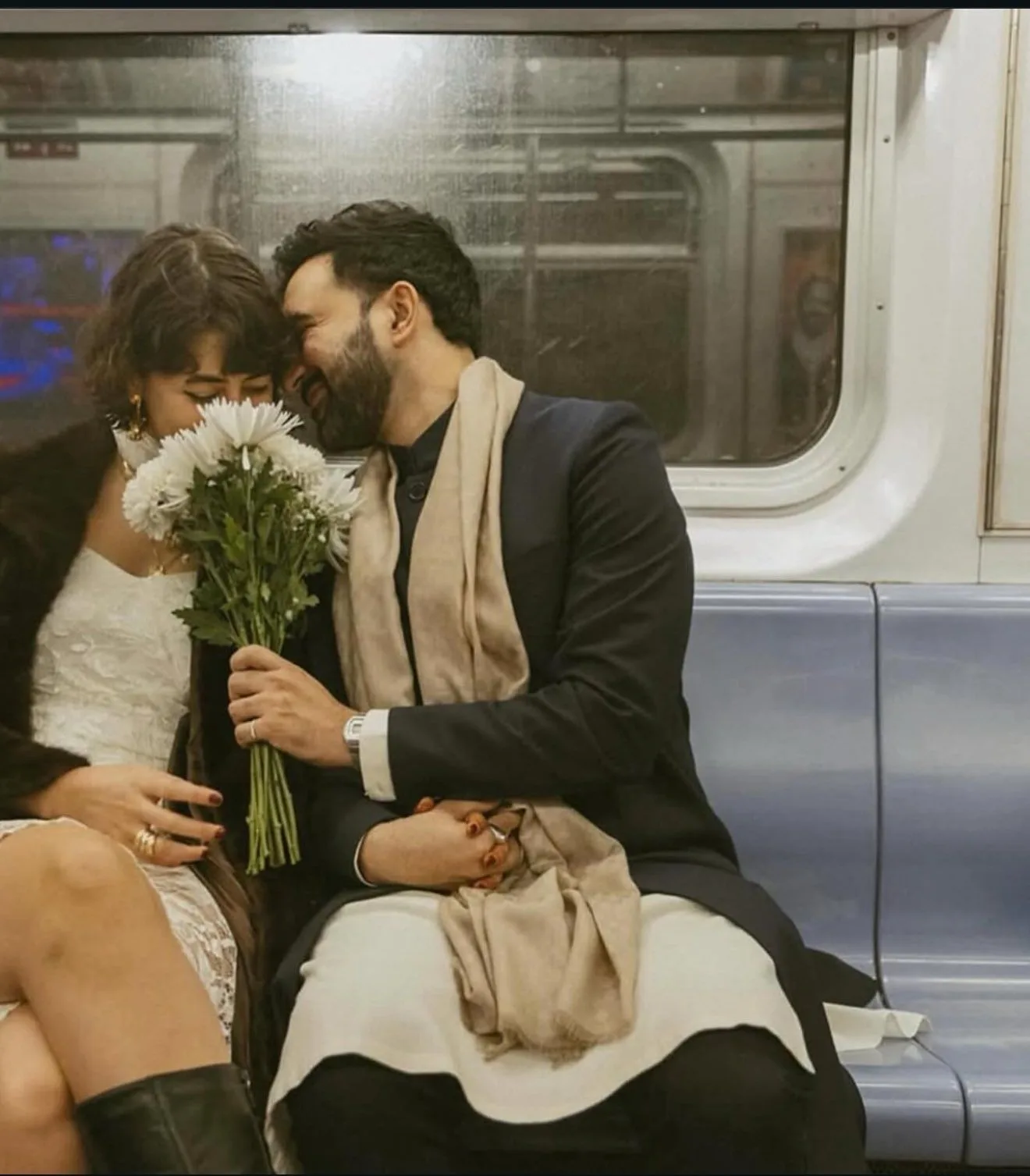
The choreography of being unseen. Duwaji’s minimalism suggests a conscious choice to be “seen” on her own terms. For many public figures’ partners, the closet becomes either a billboard or a bodyguard; Duwaji appears to weaponize invisibility. That strategy has precedents across political history, the spouse who refuses spectacle often reframes attention to the principal but in 2025 it’s also a new gesture: a Gen-Z refusal of performative glam for performance’s sake. The message is subtle: authority doesn’t require ornament; authenticity is not loud. This will create a powerful aesthetic contrast to the often maximalist visual politics of American campaigns.
What *Spine* wants to watch next. If Duwaji’s aesthetic registers as a dossier of intentional minimalism now, the narrative to follow will be the small reveals: a scarf that ties to her Syrian heritage, a collaboration with a diasporic designer, or an artist-made brooch at a cultural event. Those little choices will map where she positions cultural alliances museum commissions, gallery openings, benefit appearances and whether Gracie Mansion will become a site of quiet cultural curation. For fashion critics, the irresistible question is whether her wardrobe will remain a private act of taste or become an instrument of civic symbolism.
Final read: radical modesty as spectacle. In a moment where visual politics often trades in maximalism, Rama Duwaji’s quiet blackness reads as a fresh form of audacity. It’s not about dressing down for affect; it’s an aesthetic argument that refuses the usual binaries of glamour vs. seriousness. For Spiral Corner and for anyone who watches culture like it’s a living organism her style offers a rare kind of political fashion: understated, uncompromising, and full of narrative potential. This first impression is already a text; the next appearances will be chapters. We’ll be watching how the tailoring talks back to policy and how private taste becomes public language.
**Written by:** Mo Sabra **Editor’s Note:** Mo Sabra ***Spiral Journal*** **by Spiral Corner**